Luosang Daji · Cairang Dangzhou

Samantabhadra

Artwork introduction

Majestic Samantabhadra (2014)

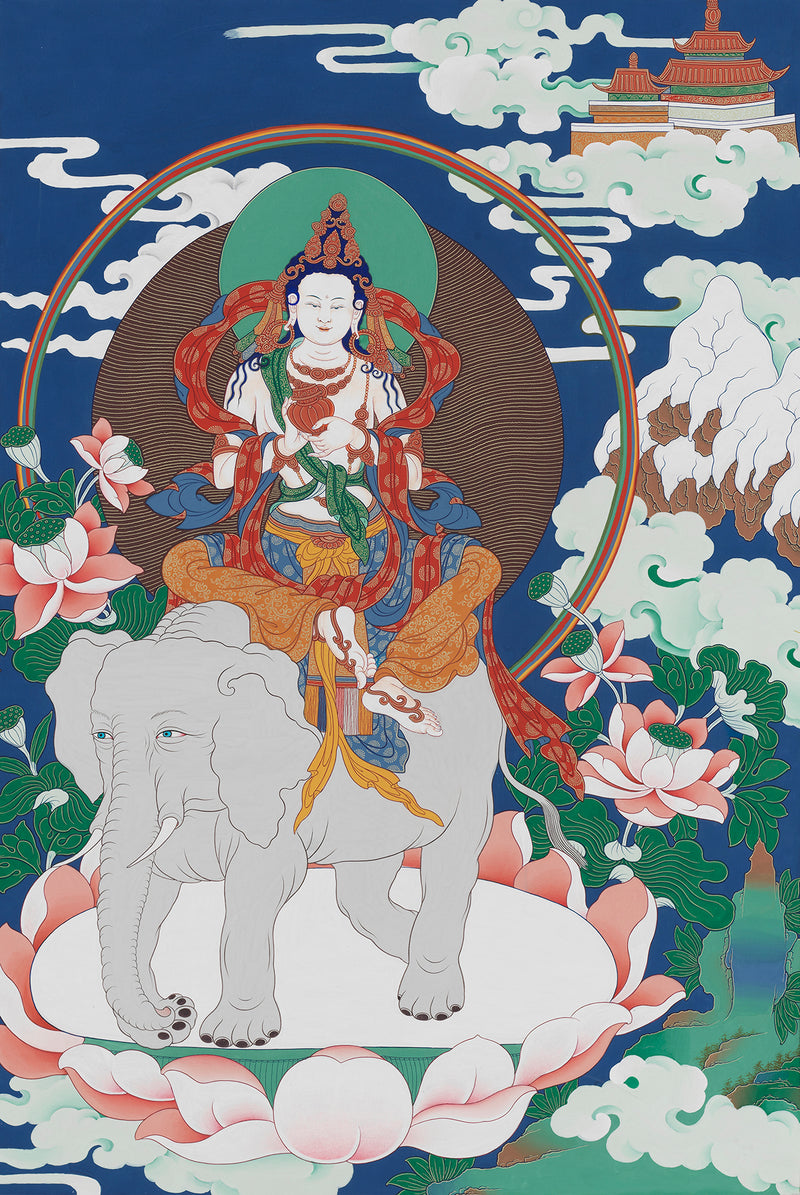
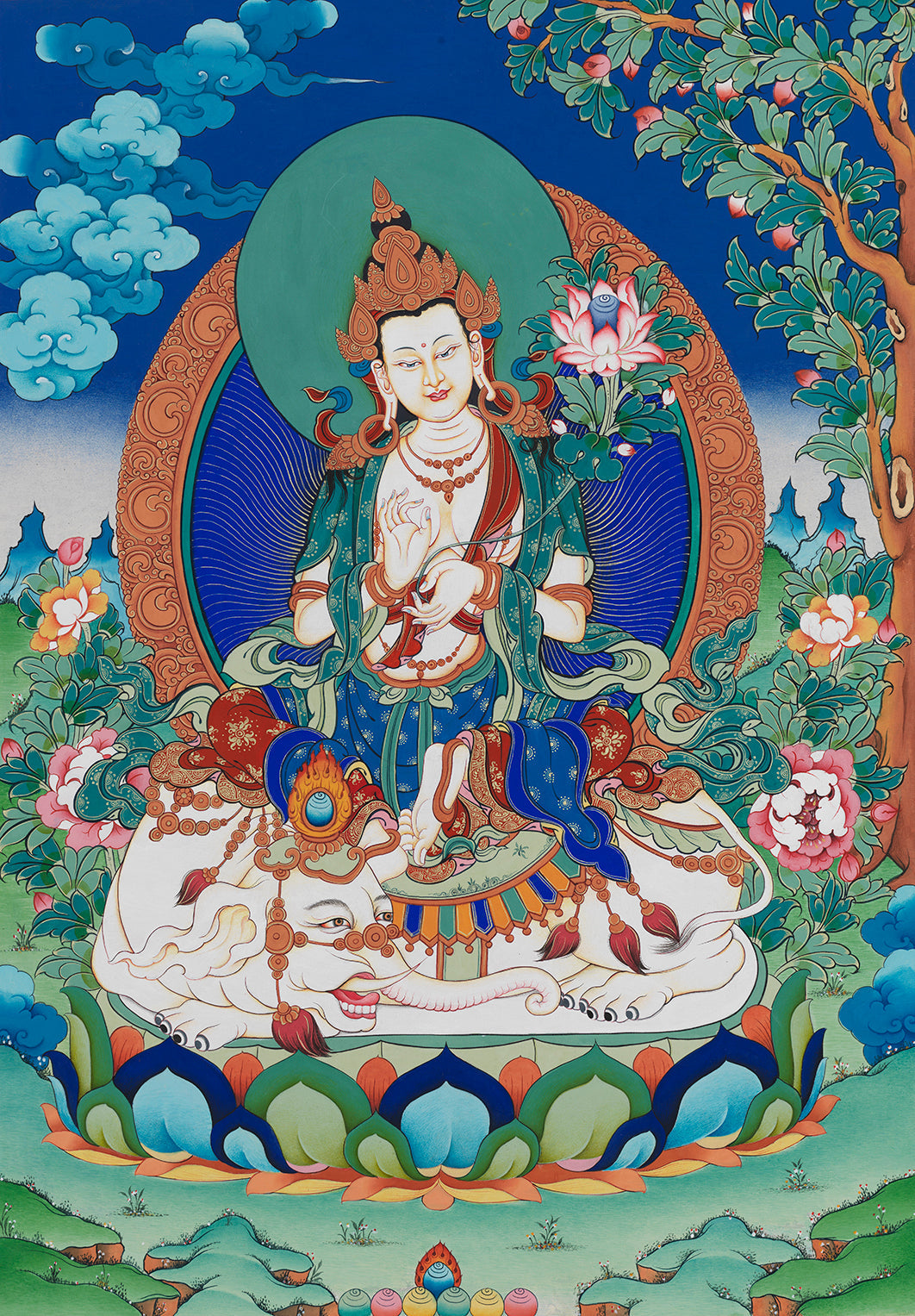
Samantabhadra, seated on a six-tusked white elephant, sheds the might of a vast army. Beside him, an ancient tree is heavy with fruit; he lightly holds a pink lotus, refined and at ease. 'All-pervading essential nature is called universal; accomplishing virtue according to conditions is called worthy.' The highest way to accomplish things is never strained, stubborn endurance, but walking with the elephant's solid, steady steps while the heart flows like water with causes and conditions. Learn to turn when necessary and patiently settle: work hard on the causes and allow the results to follow their conditions.

The jade-white bodhisattva sits on a lotus throne, while the white elephant rests below, looking back gently. A peacock-green head halo and blue moon body aureole are clear and bright. An ancient tree leans across the sky on the right, laden with flowers and ripe immortal peaches; emerald water and flowing springs surround the secluded scene. The teaching mudra at his chest lightly supports a blooming pink lotus, preserving the original altruistic intention; the reclining elephant dissolves feverish ambition; heavy peaches use spring blossoms and autumn fruit to show that good results form naturally when we cultivate without demanding a harvest. Entirely natural mineral pigments color the painting; the jade-white sacred body, malachite-green mountains, and flowing springs are shaded in layers, gentle as ancient jade and deeply scholarly in spirit. Do not struggle with results: every step is practice. With vows in your heart and roots beneath your feet, life can be abundant and expansive.

$10,310.00
勉唐画派宗师传人 罗桑达吉·才让当周大师作品
Quantity:

Total: $10,310.00

  • AliPay
  • American Express
  • Apple Pay
  • Bancontact
  • Google Pay
  • Mastercard
  • MB WAY
  • Shop Pay
  • Union Pay
  • Visa

Explore the collection: Samantabhadra

SamantabhadraYama TeachingManjushriHayagrivaPalden Lhamo
  • Hand-painted Thangka Art
  • 📦 Artwork photographs and presentation details are confirmed before dispatch.
  • 🚚 Free Shipping, Trackable Logistics
  • ↩ 30-day returns on eligible non-custom works
Artwork Details & Confirmation

Each Thangka has its own composition, dimensions and presentation. Please review the photographs and catalogue notes, and contact the museum about the work’s condition, materials or mounting before ordering.

We confirm artwork photographs and dispatch details before shipping. For a commissioned work, the subject, dimensions, materials, schedule and any agreed review stages are discussed separately.

Eligible non-custom works may be returned within 30 days of receipt, subject to the return policy.

Delivery time

Estimated delivery for available works: 10–16 business days. This consists of 5–9 business days for preparation and 5–7 business days in transit.

Preparation: order and address confirmation, checking the selected Thangka’s condition and mounting, and protective packing appropriate to the work. Commissioned works follow an individually agreed schedule.

Transit: the carrier and tracking information are provided when the work is dispatched. Commissioned works or special mounting arrangements require a separately agreed schedule. See our shipping policy.

Returns & Refunds

30-day return window: contact the museum within 30 days of receipt for eligible non-custom works. The work must be unused, in its original condition and packaging, with proof of purchase.

Commissioned or personalised works: these are non-returnable unless damaged or defective. Please discuss any difference from the confirmed commission with the museum.

Return shipping: 香港合丰 covers damaged, defective or incorrect items. For a change of mind, size or preference, the customer pays the actual return shipping cost. There is no restocking fee. Obtain return instructions before sending the work.

Approved refunds are made to the original payment method within 10 business days. If more than 15 business days have passed after approval, contact the museum. See the full return policy.

Payment Method Guide

Payment methods available for your country and currency are displayed at checkout. Please use the options shown there to complete your order.

For questions about a particular Thangka, confirm its availability, dimensions and presentation with 香港合丰 before payment. See payment information.

香港合丰 Artwork introduction

About this Thangka

Samantabhadra

庄严普贤菩萨

Majestic Samantabhadra (2014)

Every day, we introduce a thangka. Today, we explore a classic colored-thangka masterpiece from a decade ago, shedding clamor to express the Eastern ideals of 'accomplishing virtue according to conditions' and 'fulfilling both conduct and vows' with the gentle stillness of a landscape: Majestic Samantabhadra, painted in 2014.

This is again Samantabhadra seated on a six-tusked white elephant, so why does this painting have none of the force of a vast army, but instead shows a tree heavy with flowers and fruit brushing beside his shoulder, his face slightly turned and his hand lightly holding the stem of a blooming pink lotus, his bearing so refined and otherworldly? Behind this lies Eastern wisdom's most subtle answer to 'accomplishing great things': 'accomplishing virtue according to conditions.' The name Samantabhadra is explained as: 'All-pervading essential nature is called universal; accomplishing virtue according to conditions is called worthy.' Many people easily become 'strained and combative' when doing things: once they set a goal, they force themselves into nervous tension, grow anxious and hopeless at the slightest setback, and turn perfectly sound action into painful inner exhaustion. The ancient tree laden with fruit beside Samantabhadra and the lotus quietly opening in his hand reveal life's highest way of accomplishing things. True effectiveness has never meant gritting your teeth through suffering; it means taking steps as solid as an elephant's stroll, while letting the heart follow causes and conditions like flowing water. In adversity, know how to change direction; before obstacles, settle patiently. More than a bodhisattva portrait, he is like a 'gentle, clear mirror that dissolves stubbornness,' teaching us, on the path toward our goals, to 'work hard on the causes and allow the results to follow their conditions,' unhurried and unflustered, trusting that the fruit meant to form will arrive in its own time.

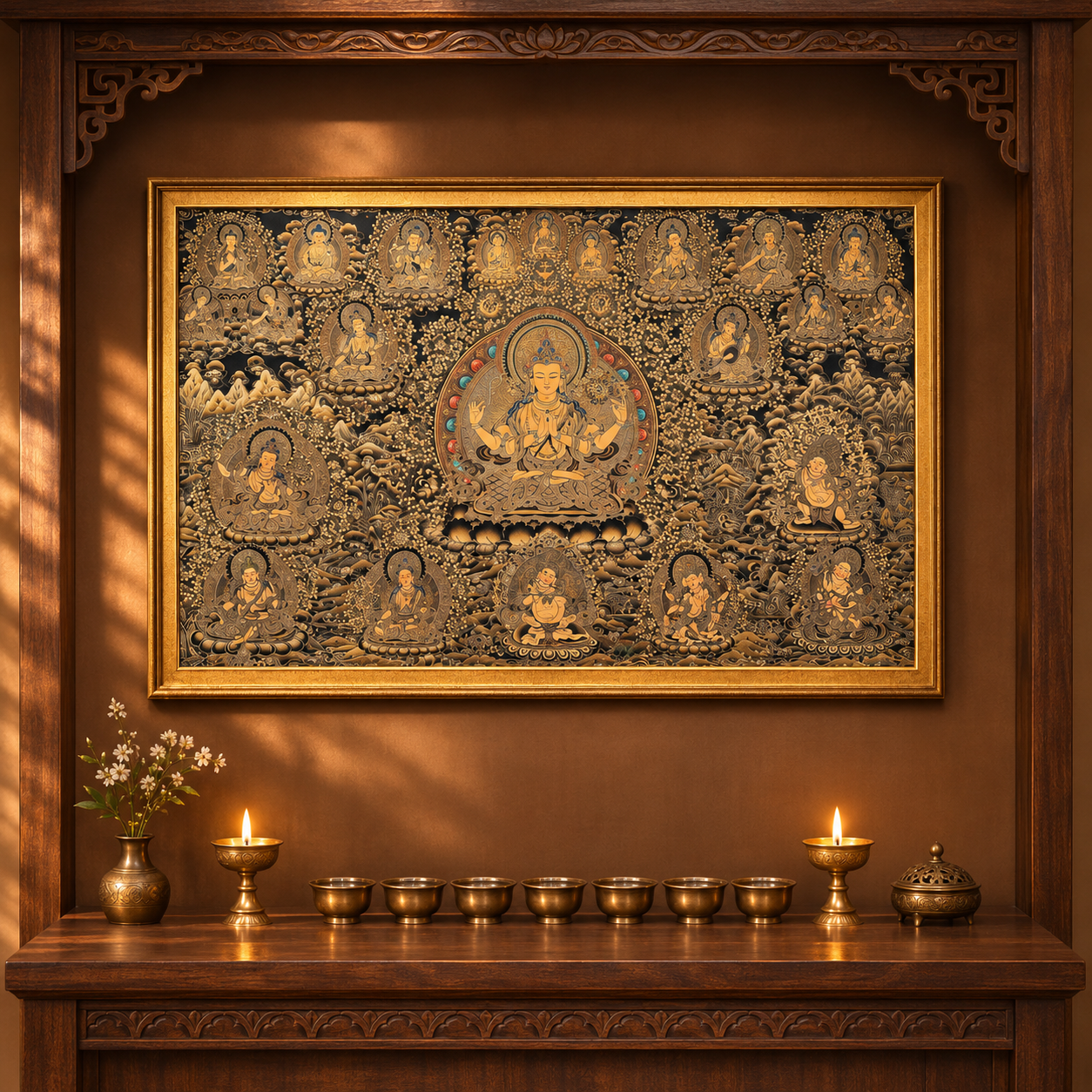
With this story in mind, the composition's overall details become clear. Samantabhadra is snowy white, seated peacefully on a blooming thousand-petaled lotus throne. Beneath him, the six-tusked white elephant rests calmly, looking back with a gentle greeting. Behind him are a lush malachite-green head halo and a deep-blue moon aureole. On the right, a vigorous, luxuriant ancient tree leans across the sky, its branches full of ripe pink immortal peaches and clusters of flowers. Emerald water and flowing springs surround the foreground, while multicolored jewels shimmer on the altar beneath his seat. The entire painting is quiet in its mountains and woods, fresh in its water and trees. Through this lively scroll of harmony between nature and humanity, the painter tells us that once inner distractions and impatience are completely stilled, all the world's beauty and abundance naturally arise according to conditions.

Look more closely at the sacred forms and details. The bodhisattva's hands lightly raised before his chest form the teaching mudra; his fingertips support the blooming thousand-petaled pink lotus extending beside his shoulder. In the scriptures, this represents 'seeing the Buddha when the flowers of Samantabhadra's Ten Great Kingly Vows open,' reminding us to preserve our pure, altruistic original intention along the long road. The six-tusked white elephant resting peacefully beneath him uses its steady repose to symbolize dissolving every agitation of chasing quick success and immediate gain, allowing a feverishly thirsty mind to land firmly. The heavy, abundant fruit on the ancient tree's branches to the right draws on the natural law of spring blossoms and autumn harvest, suggesting that if we simply cultivate steadily without demanding the harvest, blessings will naturally ripen into complete fruit.

In color, the entire painting is finely shaded with entirely natural mineral pigments. The bodhisattva's bright white-jade body appears sacred and clear against the malachite-green head halo and coral-vermilion aureole with golden scrolling foliage. The ancient tree's emerald leaves and tender pink immortal peaches complement one another on the right. Below his seat, malachite-green mountains in varying shades and emerald flowing springs are washed in layers. After more than a decade, the colors are quiet as ancient jade, exuding the supremely elegant scholarly spirit of Eastern fine-line painting.

Once you understand this Majestic Samantabhadra, you will see: work hard on the causes and allow the results to follow their conditions. Do not struggle with results; every step is spiritual practice.

May you carry vows in your heart and roots beneath your feet throughout life's long journey, neither hurrying nor growing restless, following causes and conditions and gaining a lifetime of abundance and expansiveness.

Follow 香港合丰 to discover more Eastern stories within these paintings!

Luosang Daji · Cairang Dangzhou

Luosang Daji · Cairang Dangzhou

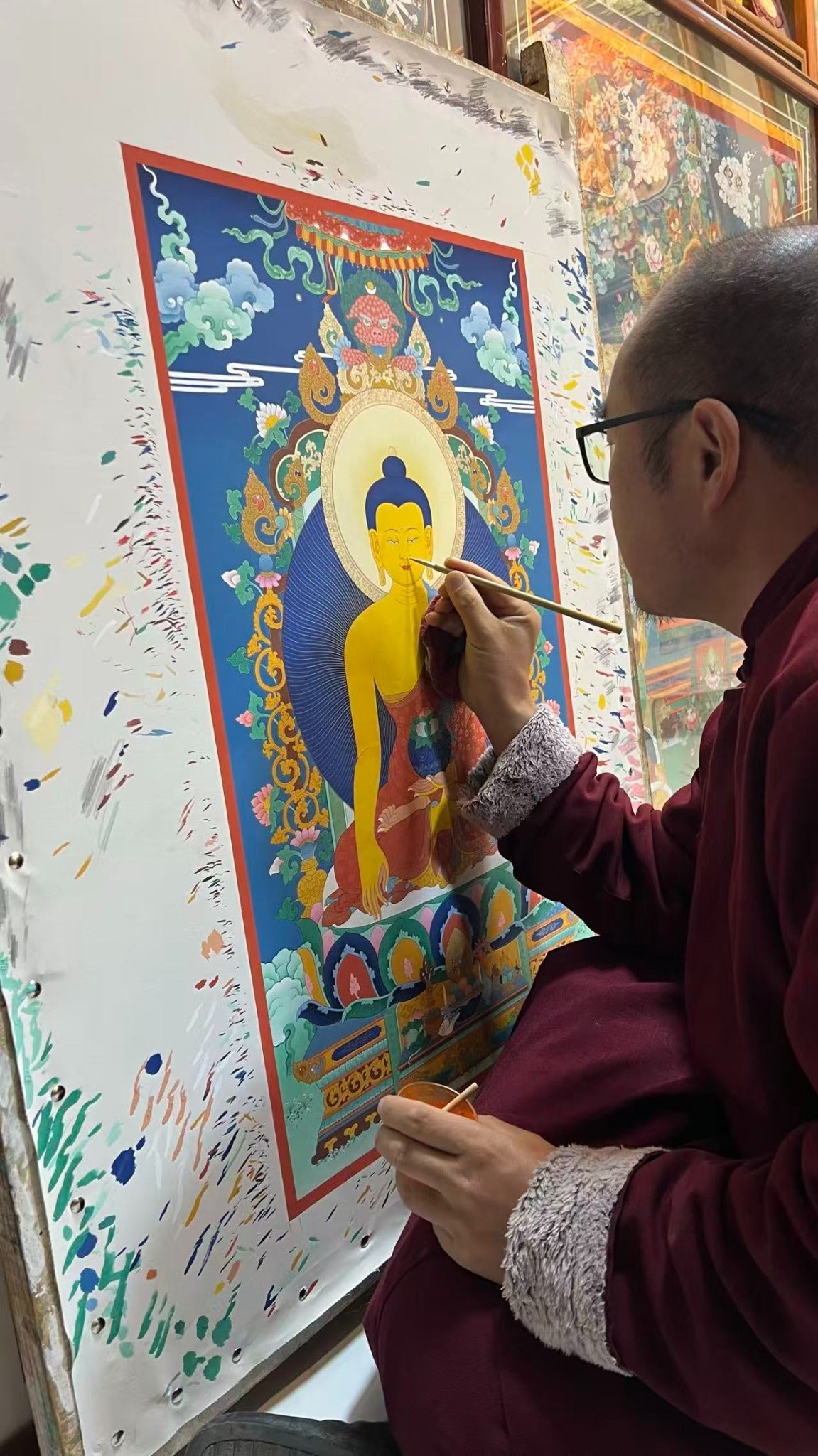
Luosang Daji · Cairang Dangzhou began learning Thangka painting at seven and studied at Wutun Upper Temple under Master Xiawu Cairang. His practice is rooted in the Menri tradition.

View artist
Artwork & Order Confirmation

Artwork & Order Confirmation

Confirm the selected Thangka, its dimensions and presentation with the museum. After ordering, check that your contact details and delivery address are correct so we can discuss the work and its dispatch.
Details & Mounting

Details & Mounting

Review photographs of the actual work and confirm its condition and mounting before dispatch. For a commission, the subject, format, materials and review stages are agreed individually with the artist and museum.
Protective Packing & Delivery

Protective Packing & Delivery

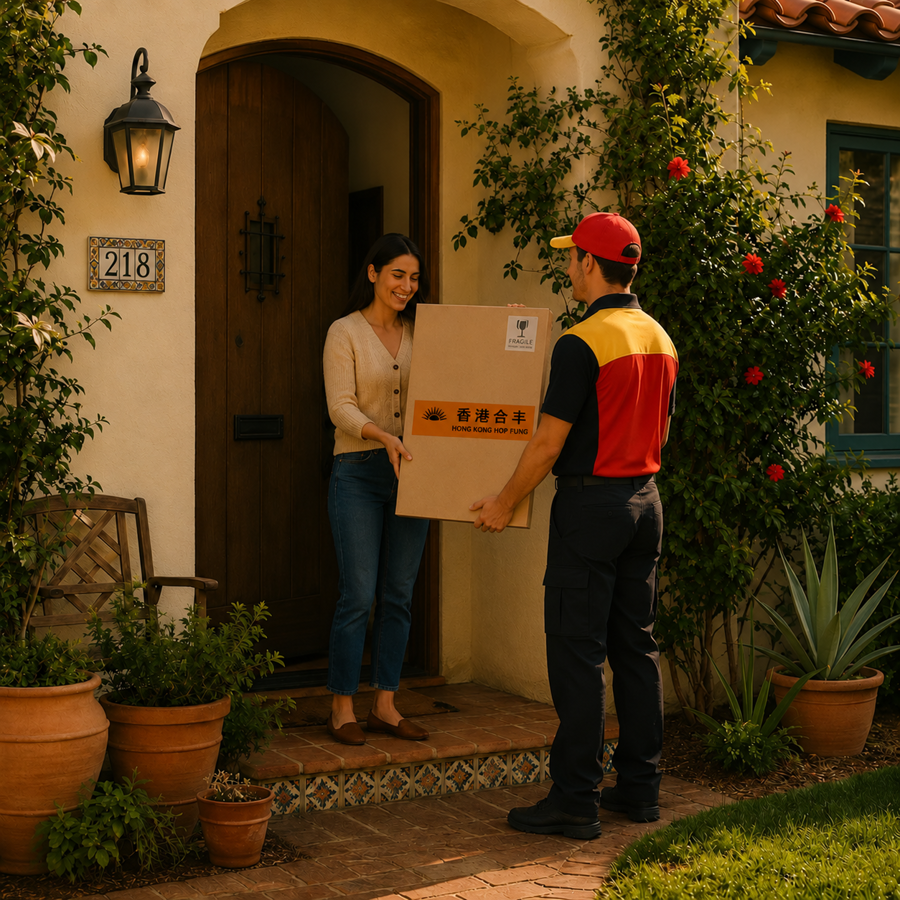
The work is packed according to its dimensions, support and mounting. Tracking details are provided after dispatch. Keep the packaging until you have inspected the Thangka and confirmed that it has arrived safely.
Viewing & Care

Viewing & Care

Spend time with the figures, line work and composition of the Thangka. Display it away from direct sunlight and damp conditions. Ask the museum for advice about mounting, framing or handling the specific work; avoid touching the painted surface.