Luosang Daji · Cairang Dangzhou

Yama Teaching

Artwork introduction

Yama Teaching the Dharma (September 2024)

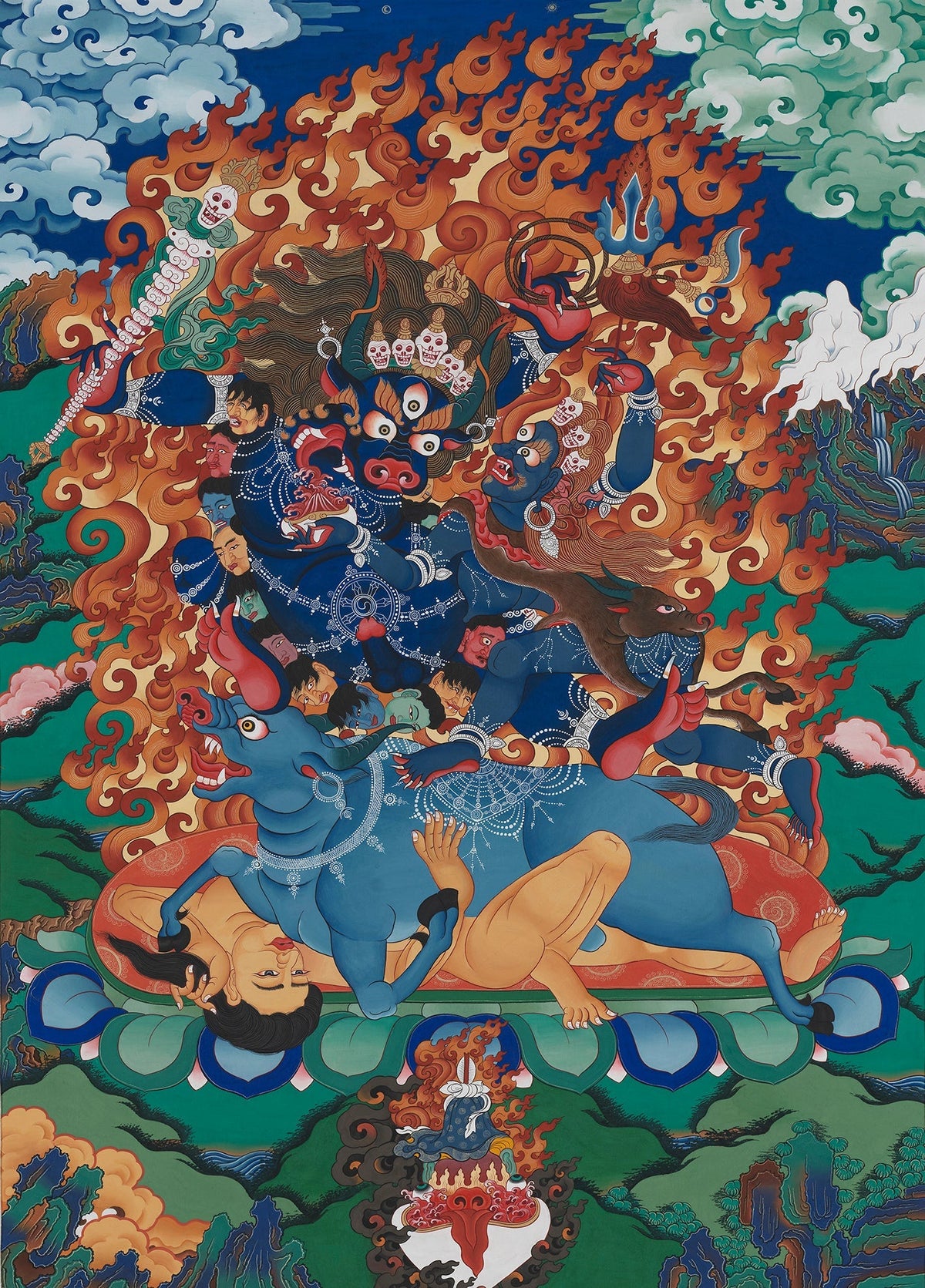
Amid all-consuming flames, a wrathful buffalo-headed figure grips a white bone staff: why is this called 'teaching the Dharma'? This fiercely unyielding form is a manifestation of Manjushri, subduing violent, destructive karma with thunderous force. When we confront attachment and adversity, retreat only allows the mire to swallow us. This figure is a sharp awakening that teaches us to find the resolve to fight back when life reaches its lowest point.

Yama, the Dharma King, glares with three eyes beneath a crown of five skulls, standing astride a raging blue-green buffalo that tramples a prostrate human body. The image suggests the thunderous force needed to crush stubborn arrogance and selfish desire. His raised right hand wields a skull-topped staff to shatter greed, anger, and ignorance; the vajra noose in his left hand binds inner demons and fear, reclaiming control. Fierce cinnabar flames sweep through the painting, while the black body carries a weighty, commanding presence. Gold and white lines define muscles taut with energy, expressing an aesthetic of strength in which 'true compassion requires the hardest armor.'

$10,310.00
勉唐画派宗师传人 罗桑达吉·才让当周大师作品
Quantity:

Total: $10,310.00

  • AliPay
  • American Express
  • Apple Pay
  • Bancontact
  • Google Pay
  • Mastercard
  • MB WAY
  • Shop Pay
  • Union Pay
  • Visa

Explore the collection: Yama Teaching

SamantabhadraYama TeachingManjushriHayagrivaPalden Lhamo
  • Hand-painted Thangka Art
  • 📦 Artwork photographs and presentation details are confirmed before dispatch.
  • 🚚 Free Shipping, Trackable Logistics
  • ↩ 30-day returns on eligible non-custom works
Artwork Details & Confirmation

Each Thangka has its own composition, dimensions and presentation. Please review the photographs and catalogue notes, and contact the museum about the work’s condition, materials or mounting before ordering.

We confirm artwork photographs and dispatch details before shipping. For a commissioned work, the subject, dimensions, materials, schedule and any agreed review stages are discussed separately.

Eligible non-custom works may be returned within 30 days of receipt, subject to the return policy.

Delivery time

Estimated delivery for available works: 10–16 business days. This consists of 5–9 business days for preparation and 5–7 business days in transit.

Preparation: order and address confirmation, checking the selected Thangka’s condition and mounting, and protective packing appropriate to the work. Commissioned works follow an individually agreed schedule.

Transit: the carrier and tracking information are provided when the work is dispatched. Commissioned works or special mounting arrangements require a separately agreed schedule. See our shipping policy.

Returns & Refunds

30-day return window: contact the museum within 30 days of receipt for eligible non-custom works. The work must be unused, in its original condition and packaging, with proof of purchase.

Commissioned or personalised works: these are non-returnable unless damaged or defective. Please discuss any difference from the confirmed commission with the museum.

Return shipping: 香港合丰 covers damaged, defective or incorrect items. For a change of mind, size or preference, the customer pays the actual return shipping cost. There is no restocking fee. Obtain return instructions before sending the work.

Approved refunds are made to the original payment method within 10 business days. If more than 15 business days have passed after approval, contact the museum. See the full return policy.

Payment Method Guide

Payment methods available for your country and currency are displayed at checkout. Please use the options shown there to complete your order.

For questions about a particular Thangka, confirm its availability, dimensions and presentation with 香港合丰 before payment. See payment information.

香港合丰 Artwork introduction

About this Thangka

Yama Teaching

阎魔讲法

Yama Teaching the Dharma (September 2024)

Each day, we introduce a thangka. Today, we explore a magnificent work in rich mineral colors that can awaken the strength to break through even in desperate circumstances: Yama Teaching the Dharma.

Flames fill the sky; a wrathful buffalo-headed manifestation holds a white bone staff. Why is this called 'teaching the Dharma'? What teaching is he giving? Behind this image lies Manjushri's deepest wisdom. In traditional culture, Yama originally embodied extreme death and violent, destructive karma. Human attachments and suffering often cannot be dispelled by a few gentle words; in adversity, constant retreat only lets the mire swallow us. Manjushri therefore manifested a form of utmost strength and ferocity, utterly subduing that violence and transforming it into an absolute power that protects the world. The Dharma he teaches has never been merely a gentle principle: it is a sharp blow that awakens us. Beyond his frightening appearance, he resembles a powerful medicine for our lowest moments, teaching us that we must find the determination to fight back against difficulty.

With this story in mind, the painting's details suddenly become clear. Look at his imposing buffalo head, three glaring eyes, bared fangs, and crown of five skulls. Barefoot, he stands astride a raging blue-green buffalo, which firmly pins a prostrate human body beneath its hooves. Ancient artists used this overwhelmingly forceful scene for more than a display of brutality. The trampled figure is a metaphor for our deepest, most stubborn attachments and prejudices. Only by crushing our inner arrogance and selfish desires can we gain genuine clarity.

Now look more closely at his sacred form and ritual objects. The skull-topped staff raised high in his right hand comes from the story of Manjushri subduing the arrogance of death. Like a sudden blow that awakens a confused mind, it decisively shatters the three poisons of greed, anger, and ignorance. The vajra noose tightly held in his left hand is described in the scriptures as a means of binding cunning inner demons. It represents firmly restraining frantic, uncontrolled thoughts and fears and taking steady control of the situation again.

In its color, roaring cinnabar-red flames sweep across the entire scene. The dark blue-green buffalo and black body have a powerful, weighty presence, while gold and white lines trace muscular contours brimming with tension, revealing the emotionally arresting aesthetic of strength in Eastern painting with rich mineral colors.

Once you understand this Yama, the Dharma King, you will see that true compassion often needs the hardest armor.

May you, too, find a fierce, unwavering focus amid life's adversities, cut through the obstacles, and move forward without fear.

Follow 香港合丰 to discover more of the Eastern stories held within these paintings!

Luosang Daji · Cairang Dangzhou

Luosang Daji · Cairang Dangzhou

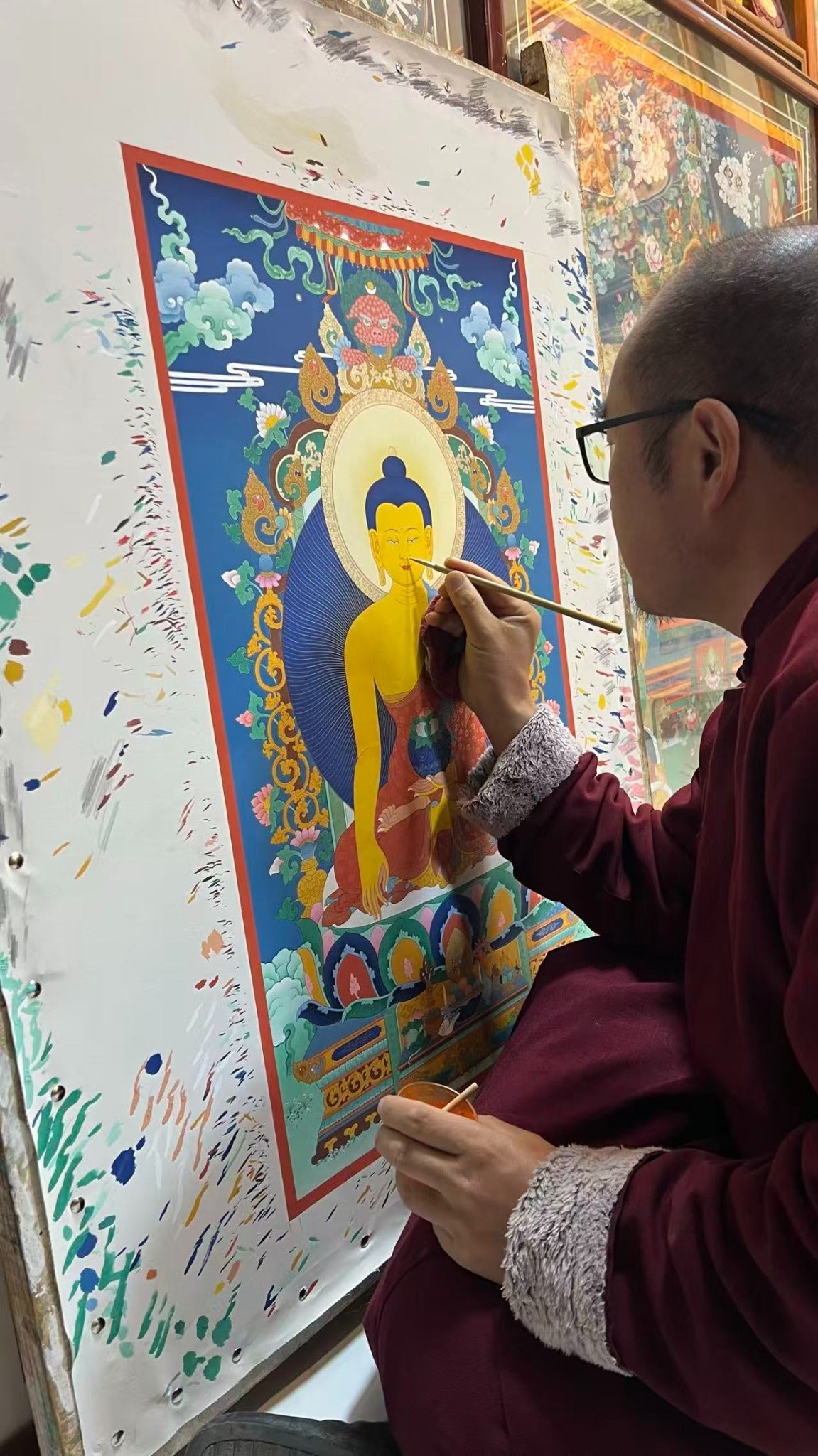
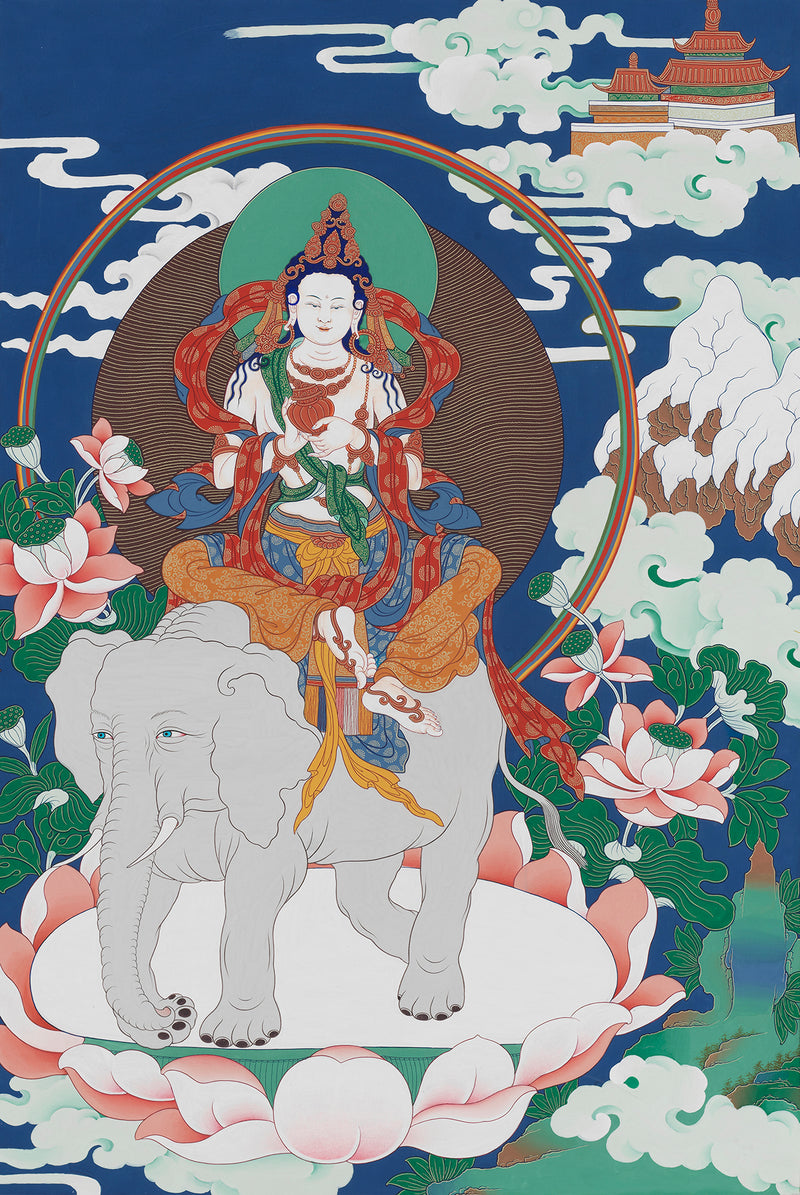
Luosang Daji · Cairang Dangzhou began learning Thangka painting at seven and studied at Wutun Upper Temple under Master Xiawu Cairang. His practice is rooted in the Menri tradition.

View artist
Artwork & Order Confirmation

Artwork & Order Confirmation

Confirm the selected Thangka, its dimensions and presentation with the museum. After ordering, check that your contact details and delivery address are correct so we can discuss the work and its dispatch.
Details & Mounting

Details & Mounting

Review photographs of the actual work and confirm its condition and mounting before dispatch. For a commission, the subject, format, materials and review stages are agreed individually with the artist and museum.

Protective Packing & Delivery

Protective Packing & Delivery

The work is packed according to its dimensions, support and mounting. Tracking details are provided after dispatch. Keep the packaging until you have inspected the Thangka and confirmed that it has arrived safely.
Viewing & Care

Viewing & Care

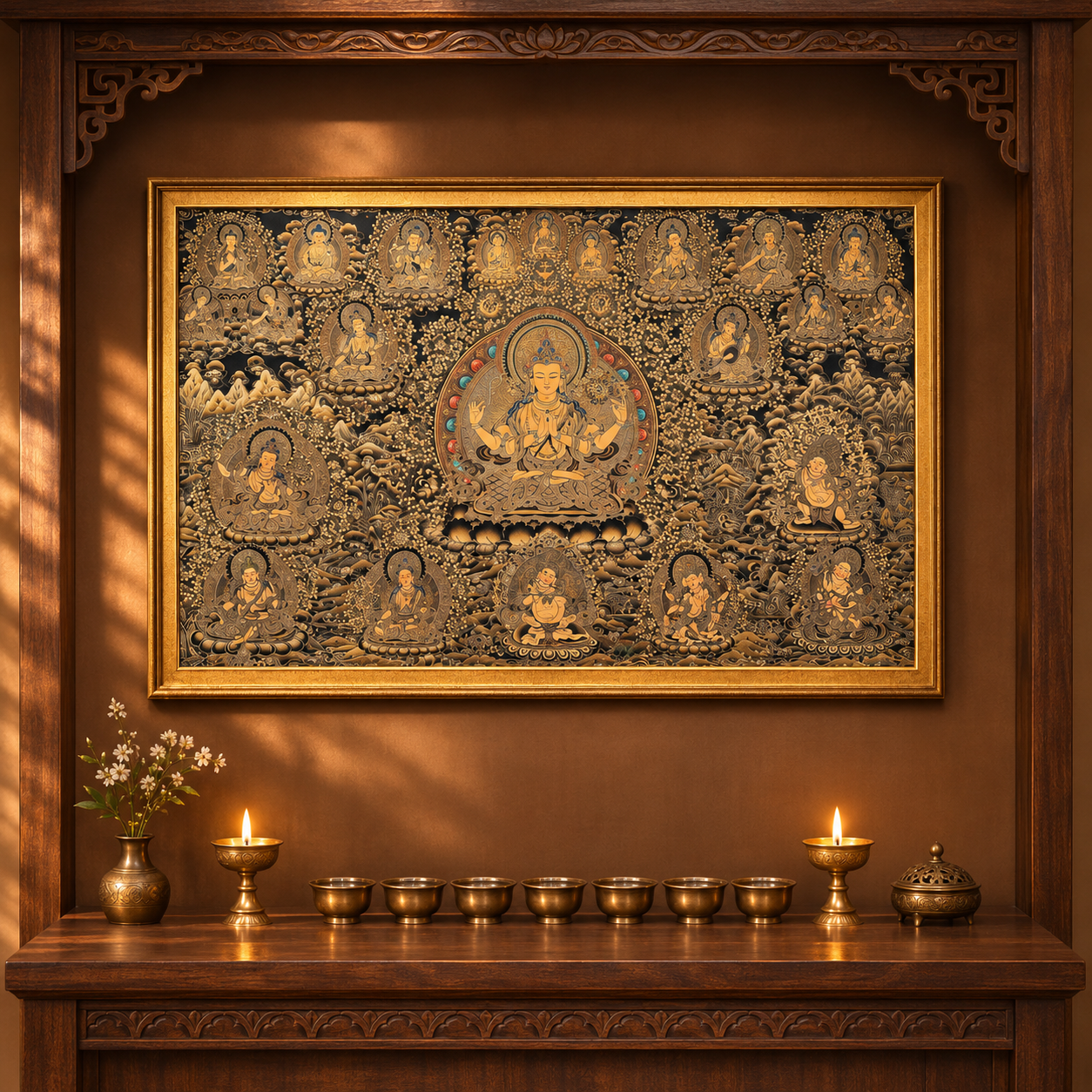
Spend time with the figures, line work and composition of the Thangka. Display it away from direct sunlight and damp conditions. Ask the museum for advice about mounting, framing or handling the specific work; avoid touching the painted surface.