Luosang Daji · Cairang Dangzhou

Shakyamuni — Blue Ground

Artwork introduction

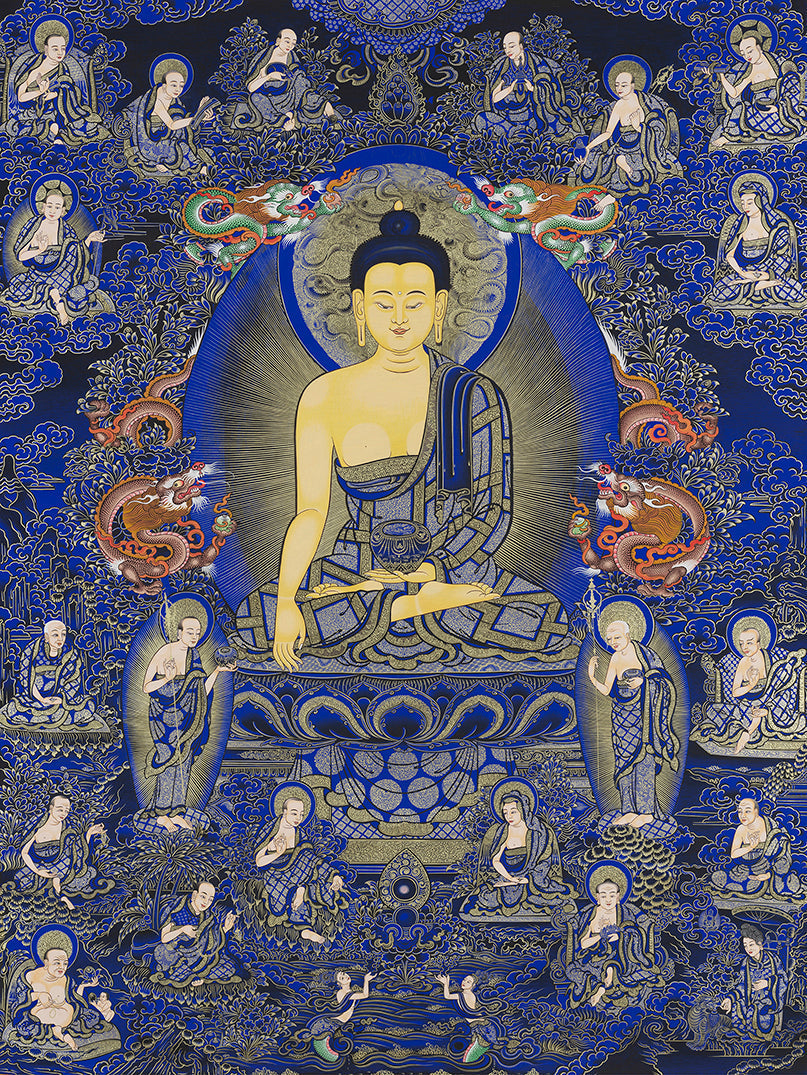
Blue Thangka of Shakyamuni (September 2014)

In a lapis-blue night, Shakyamuni sits peacefully in open space, disciples stand on either side, eighteen arhats sit scattered like stars, two dragons soar, and water deities emerge to offer treasures. The painting reveals the highest principle of human connections: pleasing others and forcing your way into circles only exhausts body and mind. When you can endure solitude and cultivate yourself into a deep-blue expanse that embraces all things, heaven and earth's favorable connections and fellow travelers will gladly come to you.

The Buddha lights the night like a bright moon. Kashyapa and Ananda stand with bowls; eighteen arhats in blue robes patterned in gold each enjoy their ease; celestial women emerge from emerald waves bearing treasures, creating immense solemn stillness. The earth-touching mudra grants the composure of taking root within; the nectar bowl symbolizes an open heart receiving countless rivers; divine dragons and celestial women suggest that mountain-like virtue naturally draws a response from heaven; the encircling arhats convey the gathering of kindred spirits. Natural lapis lazuli is serene and ethereal; fine gold lines trace dragon scales, wings, and auspicious clouds, with gold and blue glowing gently and clearly together. When flowers open, butterflies come; when the wind is right, a thousand sails run smoothly. Cultivating yourself deeply within is the most powerful principle of human connections.

$17,795.00
勉唐画派宗师传人 罗桑达吉·才让当周大师作品
Quantity:

Total: $17,795.00

  • AliPay
  • American Express
  • Apple Pay
  • Bancontact
  • Google Pay
  • Mastercard
  • MB WAY
  • Shop Pay
  • Union Pay
  • Visa

Explore the collection: Shakyamuni — Blue Ground

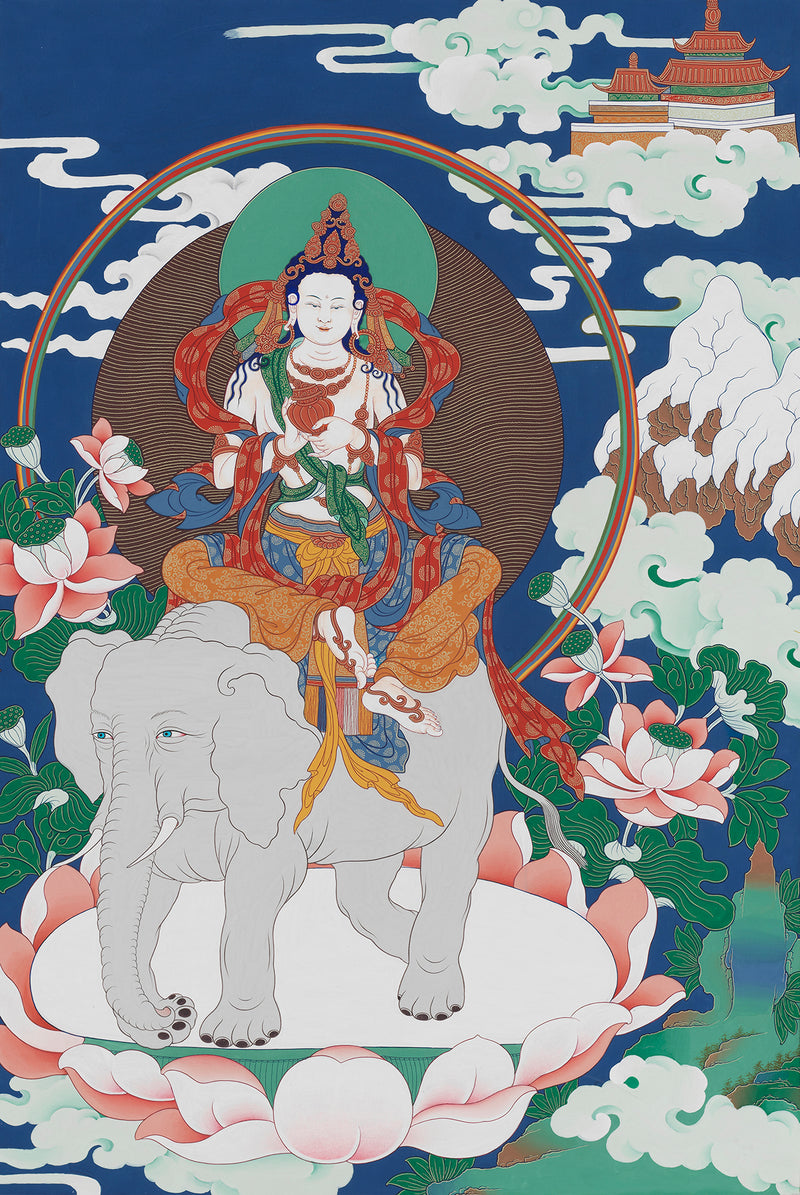
SamantabhadraYama TeachingManjushriHayagrivaPalden Lhamo
  • Hand-painted Thangka Art
  • 📦 Artwork photographs and presentation details are confirmed before dispatch.
  • 🚚 Free Shipping, Trackable Logistics
  • ↩ 30-day returns on eligible non-custom works
Artwork Details & Confirmation

Each Thangka has its own composition, dimensions and presentation. Please review the photographs and catalogue notes, and contact the museum about the work’s condition, materials or mounting before ordering.

We confirm artwork photographs and dispatch details before shipping. For a commissioned work, the subject, dimensions, materials, schedule and any agreed review stages are discussed separately.

Eligible non-custom works may be returned within 30 days of receipt, subject to the return policy.

Delivery time

Estimated delivery for available works: 10–16 business days. This consists of 5–9 business days for preparation and 5–7 business days in transit.

Preparation: order and address confirmation, checking the selected Thangka’s condition and mounting, and protective packing appropriate to the work. Commissioned works follow an individually agreed schedule.

Transit: the carrier and tracking information are provided when the work is dispatched. Commissioned works or special mounting arrangements require a separately agreed schedule. See our shipping policy.

Returns & Refunds

30-day return window: contact the museum within 30 days of receipt for eligible non-custom works. The work must be unused, in its original condition and packaging, with proof of purchase.

Commissioned or personalised works: these are non-returnable unless damaged or defective. Please discuss any difference from the confirmed commission with the museum.

Return shipping: 香港合丰 covers damaged, defective or incorrect items. For a change of mind, size or preference, the customer pays the actual return shipping cost. There is no restocking fee. Obtain return instructions before sending the work.

Approved refunds are made to the original payment method within 10 business days. If more than 15 business days have passed after approval, contact the museum. See the full return policy.

Payment Method Guide

Payment methods available for your country and currency are displayed at checkout. Please use the options shown there to complete your order.

For questions about a particular Thangka, confirm its availability, dimensions and presentation with 香港合丰 before payment. See payment information.

香港合丰 Artwork introduction

About this Thangka

Shakyamuni — Blue Ground

蓝色卡释伽牟尼

Blue Thangka of Shakyamuni (September 2014)

Every day, we introduce a thangka. Today, we explore a rare masterpiece of blue thangka painting, enriched by more than a decade, that gathers Shakyamuni's Buddhist assembly and the eighteen arhats in a lapis-lazuli night: Blue Thangka of Shakyamuni, painted in 2014.

Both are blue thangkas, so why did the previous painting show only five monks listening to the teaching at Deer Park, while in this old scroll, aged for more than a decade, Ananda and Kashyapa stand beside the Buddha, eighteen arhats encircle the open sky like stars, two dragons coil at his sides, and celestial women emerge from emerald waves below to offer treasures? Behind this lies Eastern spiritual cultivation's highest truth about 'establishing oneself and living in the world.' Buddhist scriptures record that when the Buddha sat in open space and attained enlightenment, not only did the world's holy arhats assemble like clouds, but the Dragon Kings of the Four Seas, the eight classes of divine beings, and the water deities of the deep ocean crossed mountains and seas to joyfully honor and protect him. In today's fiercely competitive life, many people spend every day 'building relationships, expanding their networks, and socializing everywhere,' afraid to fall behind. They exhaust themselves physically and mentally, yet gain mostly ineffective social connections. The image of the Buddha seated in open space as countless holy beings come to pay homage reveals life's highest law of attraction: truly dependable connections and opportunities are never won by 'forcing your way into circles,' but are 'attracted' by your own resolve and ability. More than a grand Buddhist assembly, he is like a 'guide to lifelong growth,' teaching us to stop endlessly attaching ourselves to and pleasing others in the noisy world. When you cultivate yourself into a deep-blue expanse that embraces all things, good people and good things will naturally come to you.

With this story in mind, the painting's grand composition becomes clear. At the center, golden Shakyamuni sits upright like a bright moon illuminating the long lapis-lazuli night. Kashyapa and Ananda stand holding bowls on either side, with two divine dragons breaking through clouds and soaring protectively beside him. The eighteen arhats, in blue monastic robes patterned in gold, sit scattered among clouds, flowers, and trees like brilliant stars filling the sky, each content and at ease. At the very bottom, in deep water surging with emerald waves, two celestial women emerge through the spray, respectfully offering treasures with both hands. Vast in presence yet utterly solemn and still, the scroll renders this sacred scene of all beings paying homage in pure gold and deep blue. The painter tells us that the world's strongest presence is the magnanimity that 'grows vast without contention.'

Look more closely at the sacred forms and details. The Buddha's extended right hand hangs down in the earth-touching mudra, drawn from the story of pointing to the earth as witness to his vow and defeating every external demon. It grants us the firm confidence to take root within rather than drift with the current. The nectar bowl supported before his abdomen symbolizes filling an open, receptive heart with wisdom and virtue, guiding us to lower ourselves humbly so that we can receive countless rivers. The divine dragons coiling and soaring beside him and the celestial water deities draw on legends of dragon protectors, suggesting that if a person's virtue is mountain-like, wherever they are they will draw heaven and earth's protection and favorable connections. The eighteen arhats seated around him, each showing the ease of liberation, silently convey that true kindred companions are drawn only by pure, clear light.

In color, precious natural lapis-lazuli mineral pigment covers the entire background, blue as a deep night sky washed clean of worldly ornament. After more than a decade, it shows no oxidized dullness, instead developing a refined, clear antique patina. With extremely fine pure-gold lines, the painter traces countless auspicious clouds, dragon scales, wings, and folds of the arhats' robes, layer upon layer. The Buddha's golden body glows warmly and clearly against the deep blue. Gold and blue illuminate one another in pure, ethereal color, conveying a sublime Eastern beauty that calms the spirit at first sight.

Once you understand this Blue Thangka of Shakyamuni Buddha, you will see: when flowers open, butterflies come; when the wind is right, a thousand sails run smoothly. Cultivating yourself deeply within is the strongest principle of human connections.

May you live without pandering or impatience, holding mountains and seas within your heart and naturally finding where you belong, gaining an abundance and ease that grow vast without contention.

Follow 香港合丰 to discover more Eastern stories within these paintings!

Luosang Daji · Cairang Dangzhou

Luosang Daji · Cairang Dangzhou

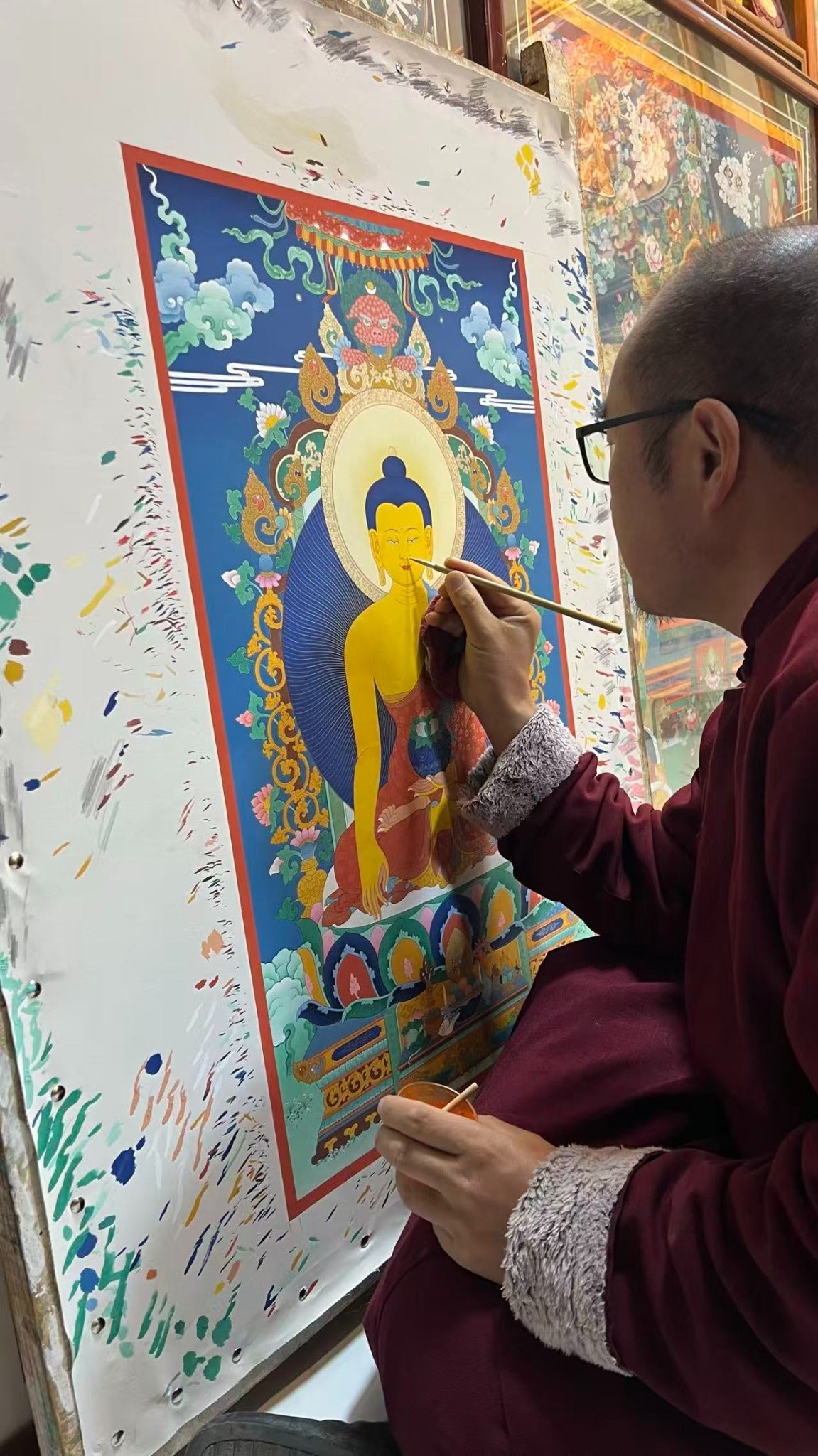
Luosang Daji · Cairang Dangzhou began learning Thangka painting at seven and studied at Wutun Upper Temple under Master Xiawu Cairang. His practice is rooted in the Menri tradition.

View artist
Artwork & Order Confirmation

Artwork & Order Confirmation

Confirm the selected Thangka, its dimensions and presentation with the museum. After ordering, check that your contact details and delivery address are correct so we can discuss the work and its dispatch.
Details & Mounting

Details & Mounting

Review photographs of the actual work and confirm its condition and mounting before dispatch. For a commission, the subject, format, materials and review stages are agreed individually with the artist and museum.

Protective Packing & Delivery

Protective Packing & Delivery

The work is packed according to its dimensions, support and mounting. Tracking details are provided after dispatch. Keep the packaging until you have inspected the Thangka and confirmed that it has arrived safely.
Viewing & Care

Viewing & Care

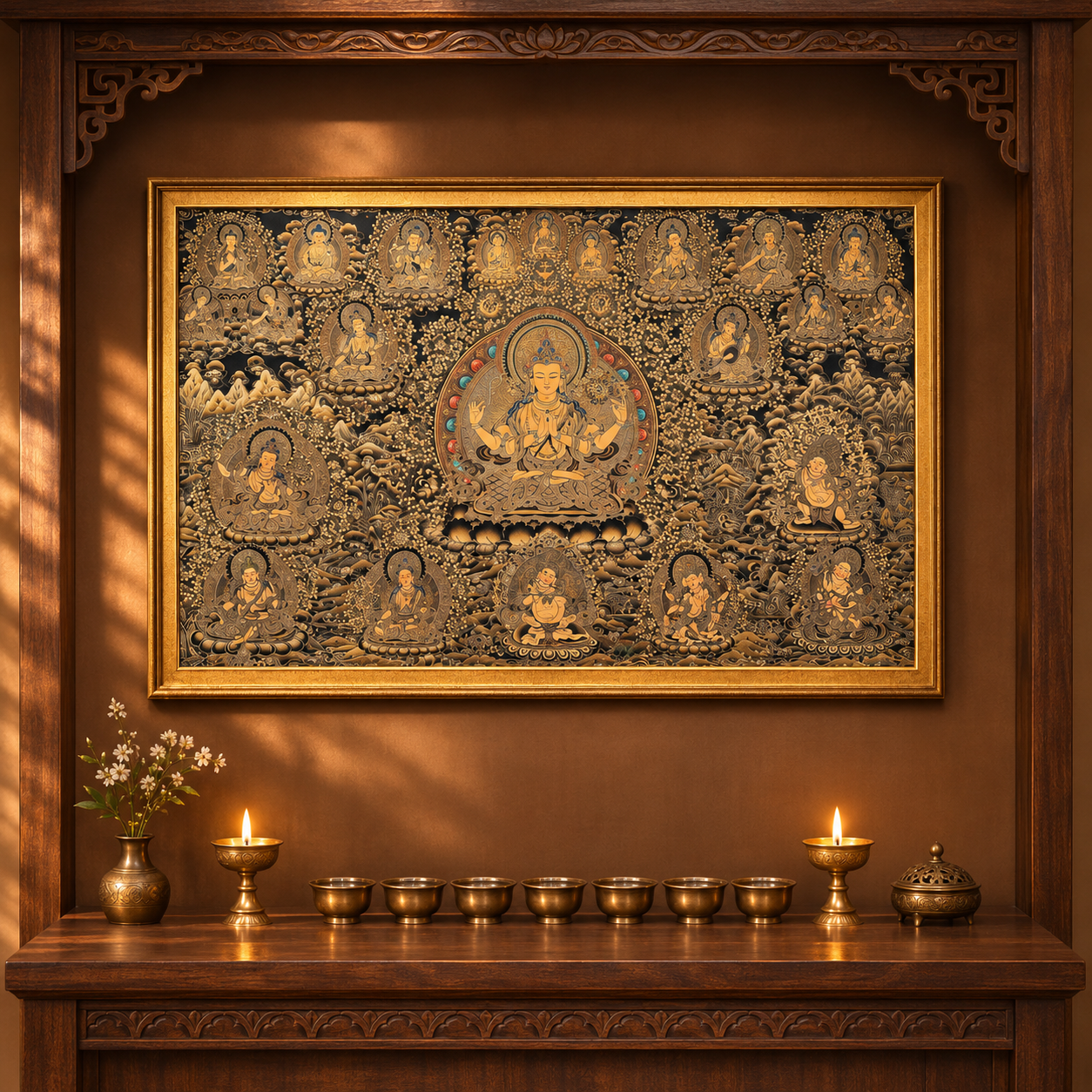
Spend time with the figures, line work and composition of the Thangka. Display it away from direct sunlight and damp conditions. Ask the museum for advice about mounting, framing or handling the specific work; avoid touching the painted surface.