Luosang Daji · Cairang Dangzhou

Shakyamuni on a Throne

Artwork introduction

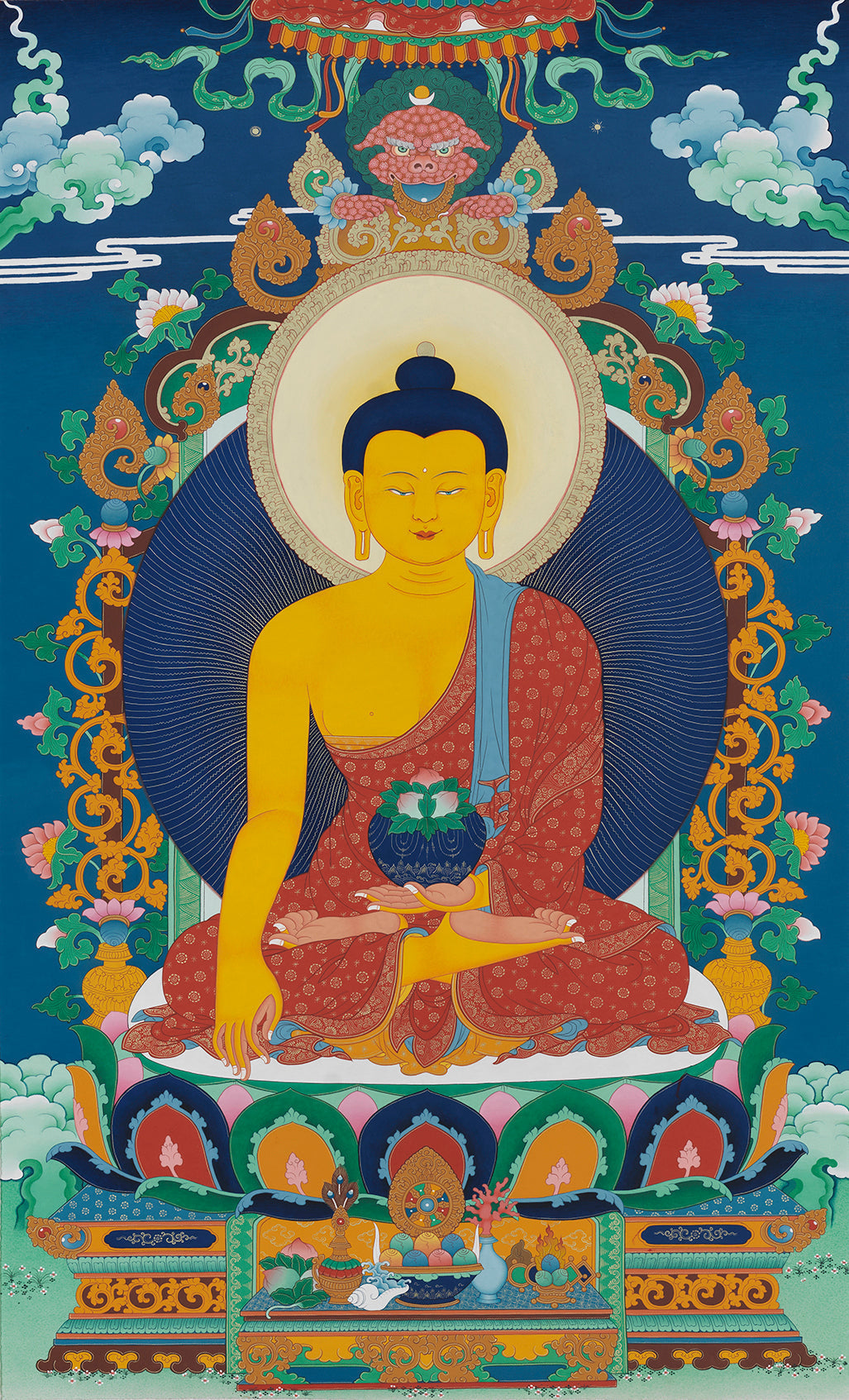
Shakyamuni Buddha Enthroned (2025)

Shakyamuni Buddha was originally Prince Siddhartha. After he renounced worldly power and attained enlightenment, heaven and earth transformed Mount Sumeru into his throne and auspicious clouds into a canopy to honor him. Chasing worldly titles and high positions often brings anxiety over gain and loss. The Buddha's dignified repose reveals the truth: there is no need to borrow light from outside. Stand upright and steady, cultivate character and resolve firm as rock, and wherever you sit becomes an unshakable Sumeru throne.

The Buddha's golden body sits serenely beneath a head halo clear as a full moon. A tasseled canopy and a fierce devouring divine face hang above him; the Sumeru throne is richly carved and painted, jewels gleam on the offering table, and blue sky and white clouds embrace the scene symmetrically. The earth-touching mudra grants a noble strength unmoving as a mountain; a rare two-colored pure lotus bearing a jewel blooms from the deep-blue nectar bowl, symbolizing the highest fragrance transformed from suffering; the canopy shields against the raging winds of affliction. His natural orpiment-yellow body shines like the rising sun, the white moon disc is gentle, and the cinnabar robe patterned in gold meets a water-blue stole in rich, full color. True regal bearing is inner clarity and resolve: dignity in the body, undivided attention in the heart, and a world of one's own.

$10,310.00
勉唐画派宗师传人 罗桑达吉·才让当周大师作品
Quantity:

Total: $10,310.00

  • AliPay
  • American Express
  • Apple Pay
  • Bancontact
  • Google Pay
  • Mastercard
  • MB WAY
  • Shop Pay
  • Union Pay
  • Visa

Explore the collection: Shakyamuni on a Throne

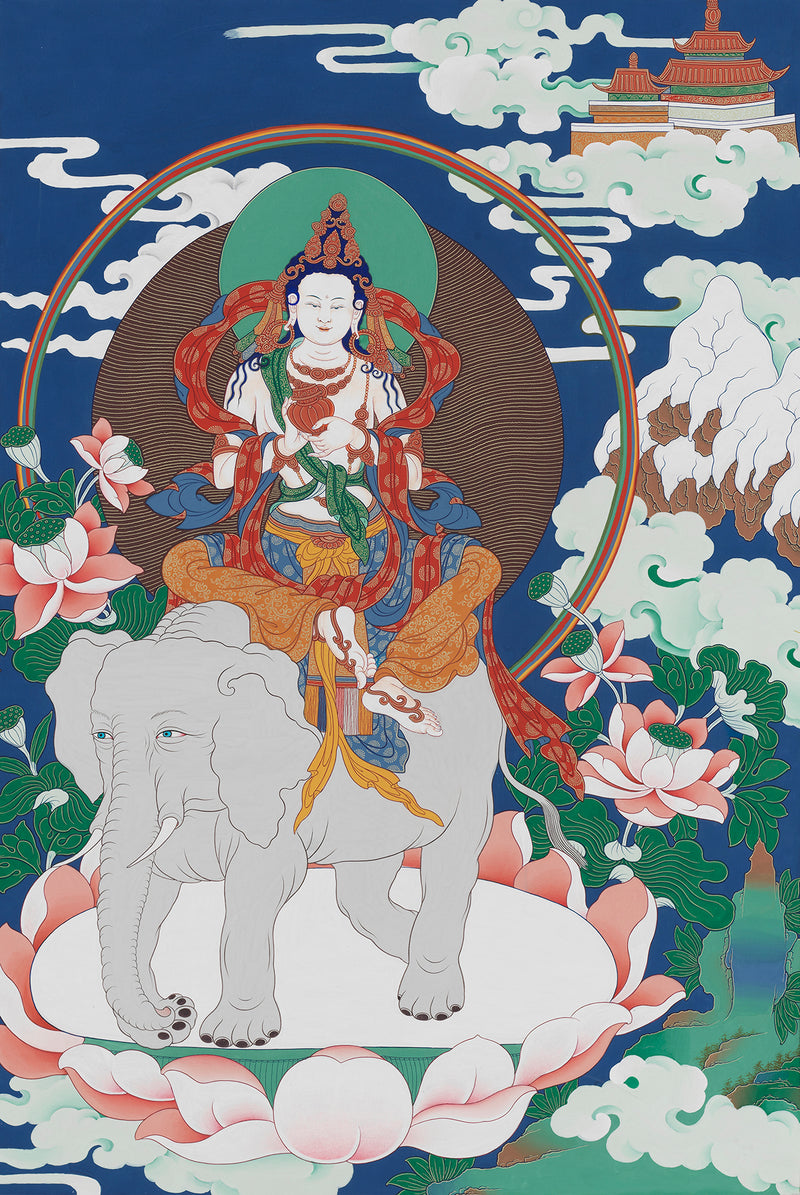
SamantabhadraYama TeachingManjushriHayagrivaPalden Lhamo
  • Hand-painted Thangka Art
  • 📦 Artwork photographs and presentation details are confirmed before dispatch.
  • 🚚 Free Shipping, Trackable Logistics
  • ↩ 30-day returns on eligible non-custom works
Artwork Details & Confirmation

Each Thangka has its own composition, dimensions and presentation. Please review the photographs and catalogue notes, and contact the museum about the work’s condition, materials or mounting before ordering.

We confirm artwork photographs and dispatch details before shipping. For a commissioned work, the subject, dimensions, materials, schedule and any agreed review stages are discussed separately.

Eligible non-custom works may be returned within 30 days of receipt, subject to the return policy.

Delivery time

Estimated delivery for available works: 10–16 business days. This consists of 5–9 business days for preparation and 5–7 business days in transit.

Preparation: order and address confirmation, checking the selected Thangka’s condition and mounting, and protective packing appropriate to the work. Commissioned works follow an individually agreed schedule.

Transit: the carrier and tracking information are provided when the work is dispatched. Commissioned works or special mounting arrangements require a separately agreed schedule. See our shipping policy.

Returns & Refunds

30-day return window: contact the museum within 30 days of receipt for eligible non-custom works. The work must be unused, in its original condition and packaging, with proof of purchase.

Commissioned or personalised works: these are non-returnable unless damaged or defective. Please discuss any difference from the confirmed commission with the museum.

Return shipping: 香港合丰 covers damaged, defective or incorrect items. For a change of mind, size or preference, the customer pays the actual return shipping cost. There is no restocking fee. Obtain return instructions before sending the work.

Approved refunds are made to the original payment method within 10 business days. If more than 15 business days have passed after approval, contact the museum. See the full return policy.

Payment Method Guide

Payment methods available for your country and currency are displayed at checkout. Please use the options shown there to complete your order.

For questions about a particular Thangka, confirm its availability, dimensions and presentation with 香港合丰 before payment. See payment information.

香港合丰 Artwork introduction

About this Thangka

Shakyamuni on a Throne

释迦摩尼佛宝座像

Shakyamuni Buddha Enthroned (2025)

Every day, we introduce a thangka. Today, we explore the museum's latest 2025 masterpiece, representing an exceptionally high level of contemporary fine-line painting within an intangible cultural heritage tradition and vividly expressing the Buddha's regal presence: Shakyamuni Buddha Enthroned.

Both paintings show Shakyamuni Buddha making the earth-touching mudra, so why did he sit alone on a lotus beside a mountain lake in the previous painting, while here he sits solemnly on a magnificent, richly carved and painted Mount Sumeru throne beneath a supremely noble royal canopy? Behind this lies Eastern culture's most lucid understanding of 'true nobility.' We all know Shakyamuni Buddha was originally Prince Siddhartha, once possessing the world's highest royal status and splendor. Yet he chose to remove his royal robes and relinquish worldly power in search of the truth that liberates human life. After his great awakening beneath the bodhi tree, heaven and earth transformed the whole of Mount Sumeru into a throne and auspicious clouds into a canopy to honor him. Living amid the scramble for fame and gain, we are often swept along by society's standards, desperately pursuing positions, titles, and empty outward prestige, afraid of falling from a supposed 'high place' and anxious all day over gain and loss. The Buddha's dignity as he sits upon the Sumeru throne exposes the fragility of worldly power: however prominent a position others bestow on you, it can be lost at any moment. Only character and resolve cultivated within, steady as Mount Tai, give you the confidence to lead your own life that no one can take away. More than a grand Buddhist painting, he is like a 'truth-revealing mirror for establishing yourself and helping others stand,' teaching us that there is no need to borrow light from outside. When you stand upright and steady yourself, the place where you sit becomes a Sumeru throne secure as a mountain.

With this story in mind, the composition's overall details become clear. The Buddha's golden body is warm and serene, with a bright head halo rising behind him, clear as a full moon. Above hangs a tasseled canopy symbolizing supreme royal dignity; a fierce taotie devouring divine face clamps its jaws at the center of the canopy's dome. Beneath him is a layered Sumeru vajra throne carved and painted with dragons and phoenixes, while mani jewels, a conch, and a coral vessel shimmer on the offering table before it. Immaculate blue sky and white clouds surround the scene symmetrically. The painter renders this panorama with the orderly rigor and solemn symmetry of a flourishing age, not to portray luxury, but to tell us that when a person's inner state is sufficiently upright, the outward pattern of their life naturally reveals this extraordinary order and dignity.

Look more closely at the sacred forms and details. The Buddha's extended right hand hangs down in the earth-touching mudra, drawn from the story of subduing evil obstacles with the earth's stability. It is intended to grant us a noble integrity as immovable as Mount Sumeru, however much confusion surrounds us. In the deep-blue nectar bowl supported before his abdomen, a rare two-colored pure lotus blooms and brings forth a jewel, symbolizing the highest fragrance that life produces through transformation amid tangled suffering. The noble canopy suspended above, according to the scriptures, represents shelter from the scorching, raging winds of all worldly afflictions, creating a cool, unobstructed expanse for spiritual practitioners.

In color, the painting demonstrates the exceptional purity of contemporary fine-line mineral-pigment work within an intangible cultural heritage tradition. Natural orpiment applied to the Buddha's body gives off a radiant golden glow like the rising sun, while his pure-white head halo is gentle as jade. Fine gold pigment traces dense floral roundels and cloud brocade across his cinnabar-red robe, beautifully complementing a translucent water-blue stole on his shoulder. Behind him, a clear azure sky and rolling, snow-white wish-fulfilling clouds illuminate each other. Bright, full, and splendid in color, the painting conveys the dignity and vitality unique to a new masterpiece of this heritage tradition.

Once you understand this Shakyamuni Buddha Enthroned, you will see: true regal bearing lies not in how much power you possess, but in having unshakable clarity and resolve within.

May you preserve your original heart amid the clamor of fame and gain, unburdened by empty reputation, dignified in bearing and firm in resolve, living with a steady composure of your own.

Follow 香港合丰 to discover more Eastern stories within these paintings!

Luosang Daji · Cairang Dangzhou

Luosang Daji · Cairang Dangzhou

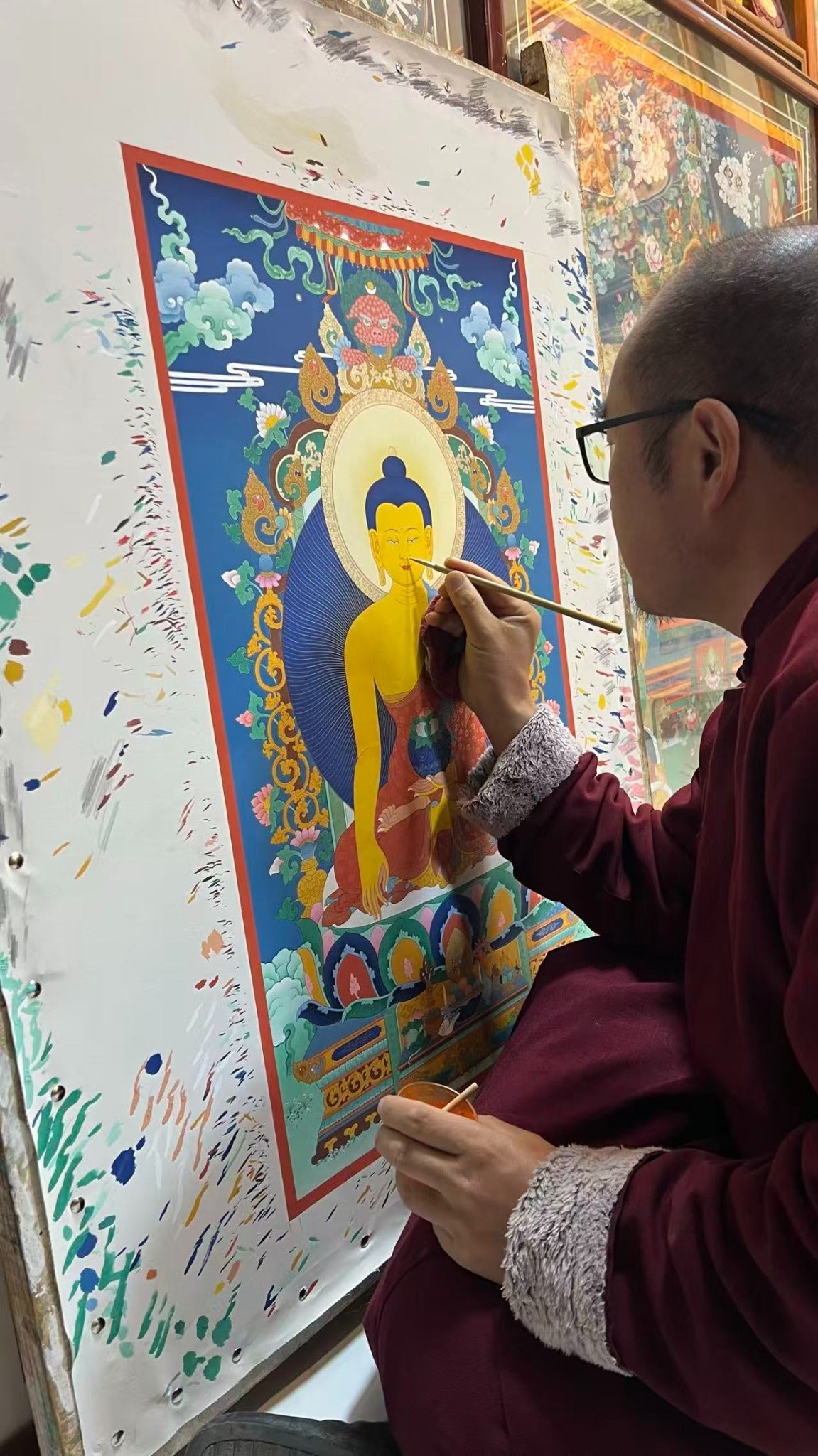
Luosang Daji · Cairang Dangzhou began learning Thangka painting at seven and studied at Wutun Upper Temple under Master Xiawu Cairang. His practice is rooted in the Menri tradition.

View artist
Artwork & Order Confirmation

Artwork & Order Confirmation

Confirm the selected Thangka, its dimensions and presentation with the museum. After ordering, check that your contact details and delivery address are correct so we can discuss the work and its dispatch.
Details & Mounting

Details & Mounting

Review photographs of the actual work and confirm its condition and mounting before dispatch. For a commission, the subject, format, materials and review stages are agreed individually with the artist and museum.

Protective Packing & Delivery

Protective Packing & Delivery

The work is packed according to its dimensions, support and mounting. Tracking details are provided after dispatch. Keep the packaging until you have inspected the Thangka and confirmed that it has arrived safely.
Viewing & Care

Viewing & Care

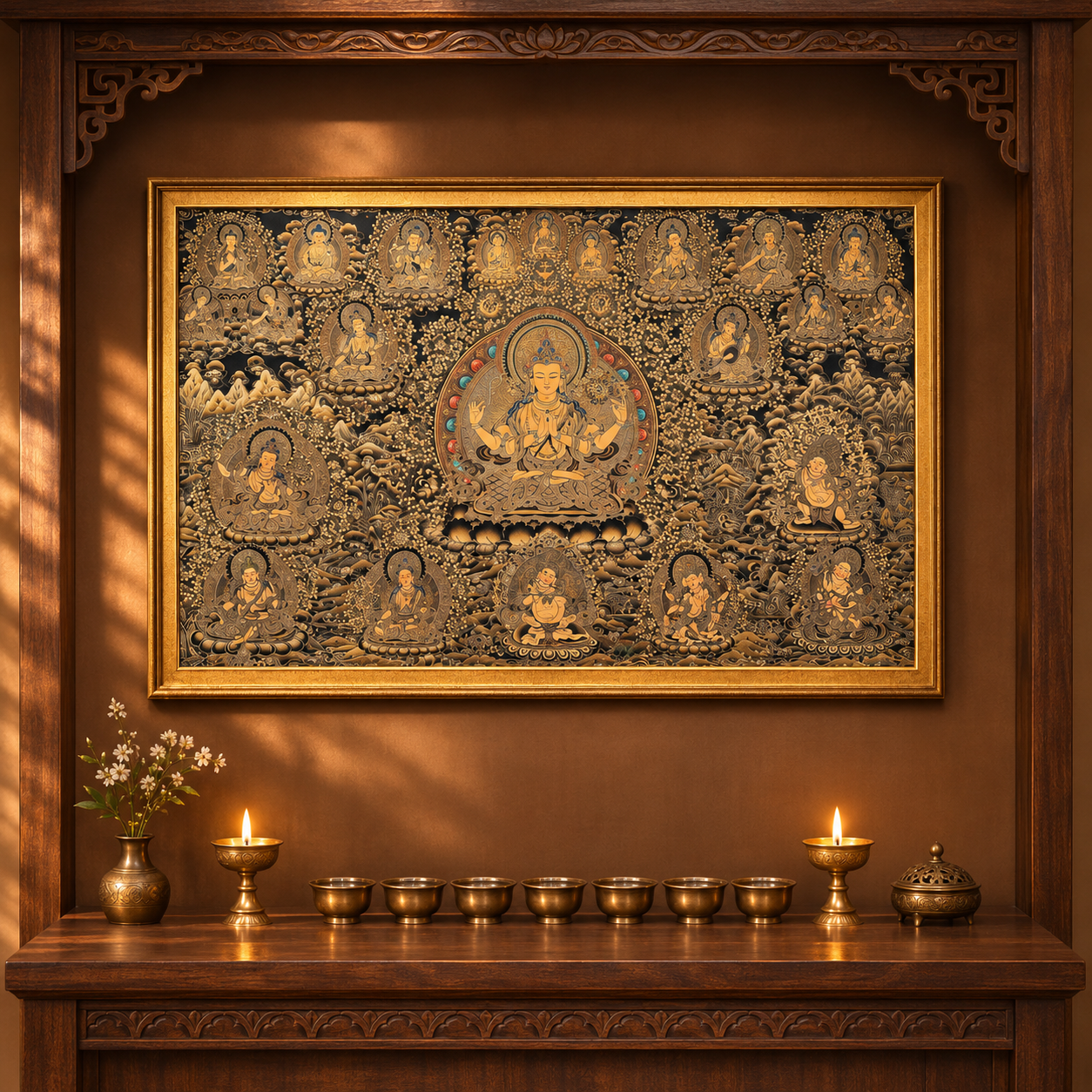
Spend time with the figures, line work and composition of the Thangka. Display it away from direct sunlight and damp conditions. Ask the museum for advice about mounting, framing or handling the specific work; avoid touching the painted surface.