Luosang Daji · Cairang Dangzhou

Amitayus with the Longevity Deities

Artwork introduction

Amitayus and the Three Longevity Deities (2024)

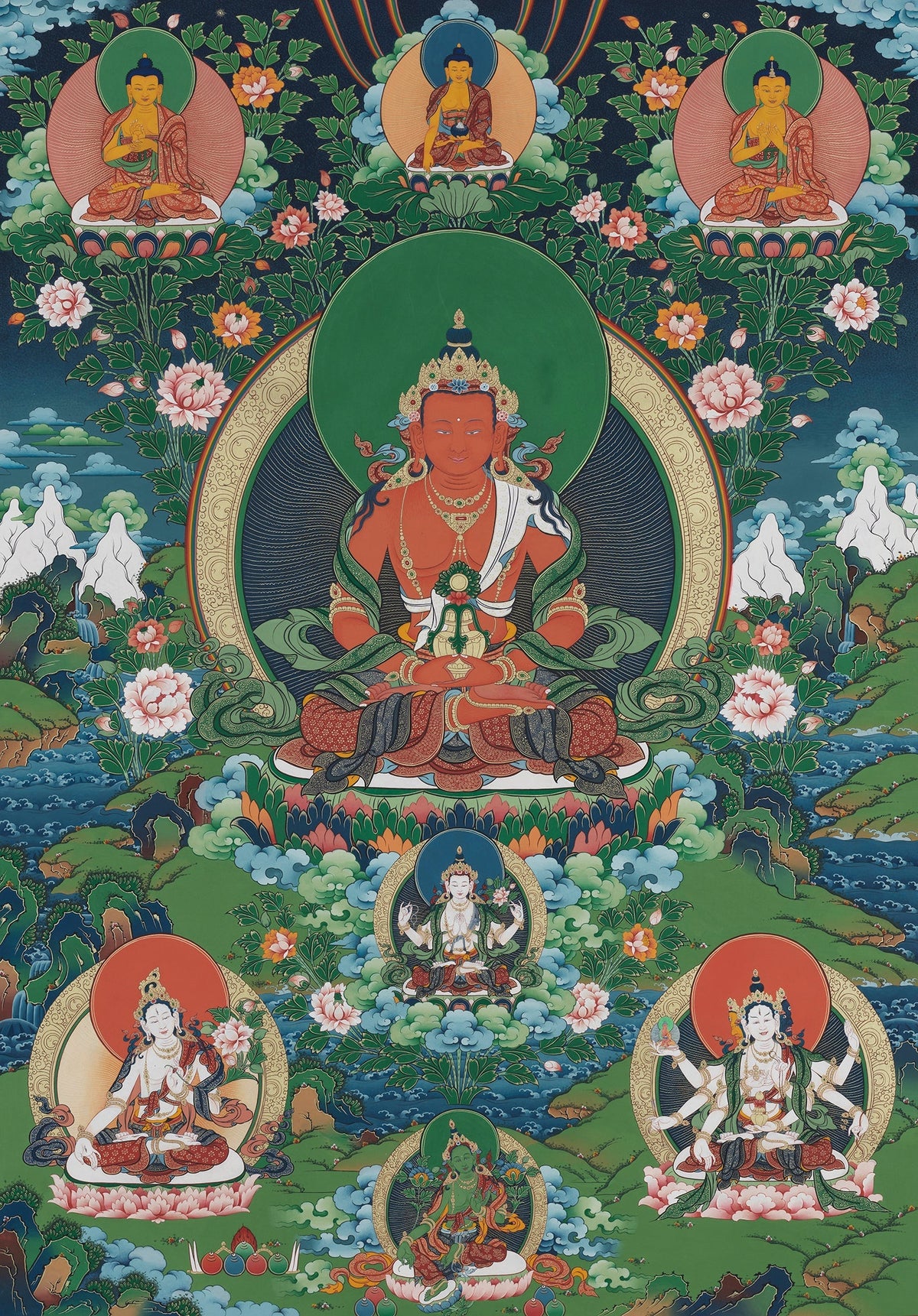
Amitayus wears jeweled ornaments and a precious crown and holds a golden longevity vase. Together with White Tara and Ushnishavijaya below his seat, he forms the Three Longevity Deities. Longevity means more than adding years while barely surviving; it is a high quality of life in which the body is free of illness, the heart free of hindrance, and the years free of calamity. The three gathered together are like a guide to caring for life, teaching us to protect our vital energy amid constant activity.

The coral-red Buddha sits on a great lotus like a warm rising sun, with White Tara and three-faced, eight-armed Ushnishavijaya beside him like bright moons; Four-Armed Avalokiteshvara and Green Tara protect above and below, surrounded by snowy peaks, glaciers, and cascading waterfalls. The meditation mudra supports a longevity vase that pours vitality into life; White Tara's seven eyes soothe hidden illnesses; and Ushnishavijaya holds a rope and arrows to shatter accidents and unexpected calamities. Pure cinnabar coral red is warm and full, the malachite-green halo is like newly opened jade, and white-jade bodies appear pure and otherworldly against snowy mountains. A healthy body is the greatest wealth, a worry-free heart the best longevity: may blessing, long life, peace, and health bring composure year after year.

$17,795.00
勉唐画派宗师传人 罗桑达吉·才让当周大师作品
Quantity:

Total: $17,795.00

  • AliPay
  • American Express
  • Apple Pay
  • Bancontact
  • Google Pay
  • Mastercard
  • MB WAY
  • Shop Pay
  • Union Pay
  • Visa

Explore the collection: Amitayus with the Longevity Deities

SamantabhadraYama TeachingManjushriHayagrivaPalden Lhamo
  • Hand-painted Thangka Art
  • 📦 Artwork photographs and presentation details are confirmed before dispatch.
  • 🚚 Free Shipping, Trackable Logistics
  • ↩ 30-day returns on eligible non-custom works
Artwork Details & Confirmation

Each Thangka has its own composition, dimensions and presentation. Please review the photographs and catalogue notes, and contact the museum about the work’s condition, materials or mounting before ordering.

We confirm artwork photographs and dispatch details before shipping. For a commissioned work, the subject, dimensions, materials, schedule and any agreed review stages are discussed separately.

Eligible non-custom works may be returned within 30 days of receipt, subject to the return policy.

Delivery time

Estimated delivery for available works: 10–16 business days. This consists of 5–9 business days for preparation and 5–7 business days in transit.

Preparation: order and address confirmation, checking the selected Thangka’s condition and mounting, and protective packing appropriate to the work. Commissioned works follow an individually agreed schedule.

Transit: the carrier and tracking information are provided when the work is dispatched. Commissioned works or special mounting arrangements require a separately agreed schedule. See our shipping policy.

Returns & Refunds

30-day return window: contact the museum within 30 days of receipt for eligible non-custom works. The work must be unused, in its original condition and packaging, with proof of purchase.

Commissioned or personalised works: these are non-returnable unless damaged or defective. Please discuss any difference from the confirmed commission with the museum.

Return shipping: 香港合丰 covers damaged, defective or incorrect items. For a change of mind, size or preference, the customer pays the actual return shipping cost. There is no restocking fee. Obtain return instructions before sending the work.

Approved refunds are made to the original payment method within 10 business days. If more than 15 business days have passed after approval, contact the museum. See the full return policy.

Payment Method Guide

Payment methods available for your country and currency are displayed at checkout. Please use the options shown there to complete your order.

For questions about a particular Thangka, confirm its availability, dimensions and presentation with 香港合丰 before payment. See payment information.

香港合丰 Artwork introduction

About this Thangka

Amitayus with the Longevity Deities

无量寿佛长寿三尊

Amitayus and the Three Longevity Deities (2024)

Each day, we introduce you to a thangka. Today we explore a classic monumental mineral-color painting uniting the Eastern ideals of blessing, longevity, health, and peace, representing the highest wish for well-being: Amitayus and the Three Longevity Deities, painted in 2024.

Why, among Eastern thangkas seeking blessing and longevity, does Amitayus wear a five-leaf crown, jeweled ornaments, and brocade instead of the plain monastic robes of an ordinary Buddha, while firmly supporting a gleaming golden vase in his palms? Behind this appearance lies Eastern culture's fullest pursuit of quality of life. In the Tibetan tradition, Amitayus is Amitabha's sambhogakaya, or enjoyment-body, form, symbolizing the most complete blossoming of life energy and merit. The vase in his palms is filled with the nectar of immortality, specifically to nourish the vital essence depleted by worldly exertion. More wonderfully still, the painting brings together the East's renowned Three Longevity Deities below his seat: Amitayus strengthens life's foundation and extends the years; White Tara pacifies calamity and dispels illness; and Ushnishavijaya resolves accidents and unexpected disasters. Many people assume longevity simply means living a long time. Yet if those years are spent bedridden and frightened, extending life can become a torment. The Three Longevity Deities tell us that true blessing and longevity mean a body free of illness, a heart free of hindrance, and years free of calamity. This image of life extension is like a guide to caring for life passed down by ancient people, teaching us, while chasing fame and profit, to pause and protect our vital energy, treat the body kindly, and give the heart a resting place.

With this story in mind, the painting's grand composition becomes clear. See how Amitayus at the very center sits on a great lotus throne, his coral-red body like the warm rising sun. Below, White Tara and three-faced, eight-armed Ushnishavijaya accompany him on either side like bright moons. In the center, Four-Armed Avalokiteshvara and Green Tara also offer protection above and below. Towering snow-covered glaciers and plunging waterfalls surround the entire scene behind them, with flowers flourishing in abundance. The artist gathers these five supreme protectors of life into one scroll to convey more than grandeur: when a person regulates the breath and keeps the heart open and free of hindrance, all the endlessly renewing auspicious peace between heaven and earth becomes a shield of health protecting a lifetime.

Now look at the sacred forms and their details. Amitayus forms a steady meditation mudra with both hands before his abdomen, supporting what is called a longevity vase. Immortal medicinal plants and wish-fulfilling peacock feathers rise from its mouth, nourishing our exhausted minds and spirits and infusing life with unending vitality. White Tara sits on the left, her seven eyes observing the world's illnesses and her right hand offering the wish-granting mudra to soothe every hidden ailment. Ushnishavijaya sits on the right, her three faces and eight arms holding vajra ropes and sharp arrows, representing absolute strength that shatters accidents and unexpected calamities. Together, the three construct life's most comprehensive protection.

In its colors, the principal Buddha's pure natural cinnabar coral red is warm and full. The vivid, clear malachite-green halo behind his head is like freshly revealed emerald jade. Below his seat, the white-jade bodies of White Tara and Ushnishavijaya appear pure and beyond the world amid snowy mountains and emerald water. Green mountain ranges, pink-and-white peonies, and the deep-blue sky reflect and mingle around them. Elegant, clear, and brimming with life, the palette radiates an Eastern spirit of blessing and longevity that brings peace to the heart.

Once you understand this Amitayus and the Three Longevity Deities, you will see: a body free of illness is the greatest wealth, and a heart free of worry is the best longevity.

May you and your family enjoy both blessing and long life through the years, free of illness and worry, peaceful and harmonious, with joy that never ends.

Follow 香港合丰 to discover more Eastern stories within the paintings!

Luosang Daji · Cairang Dangzhou

Luosang Daji · Cairang Dangzhou

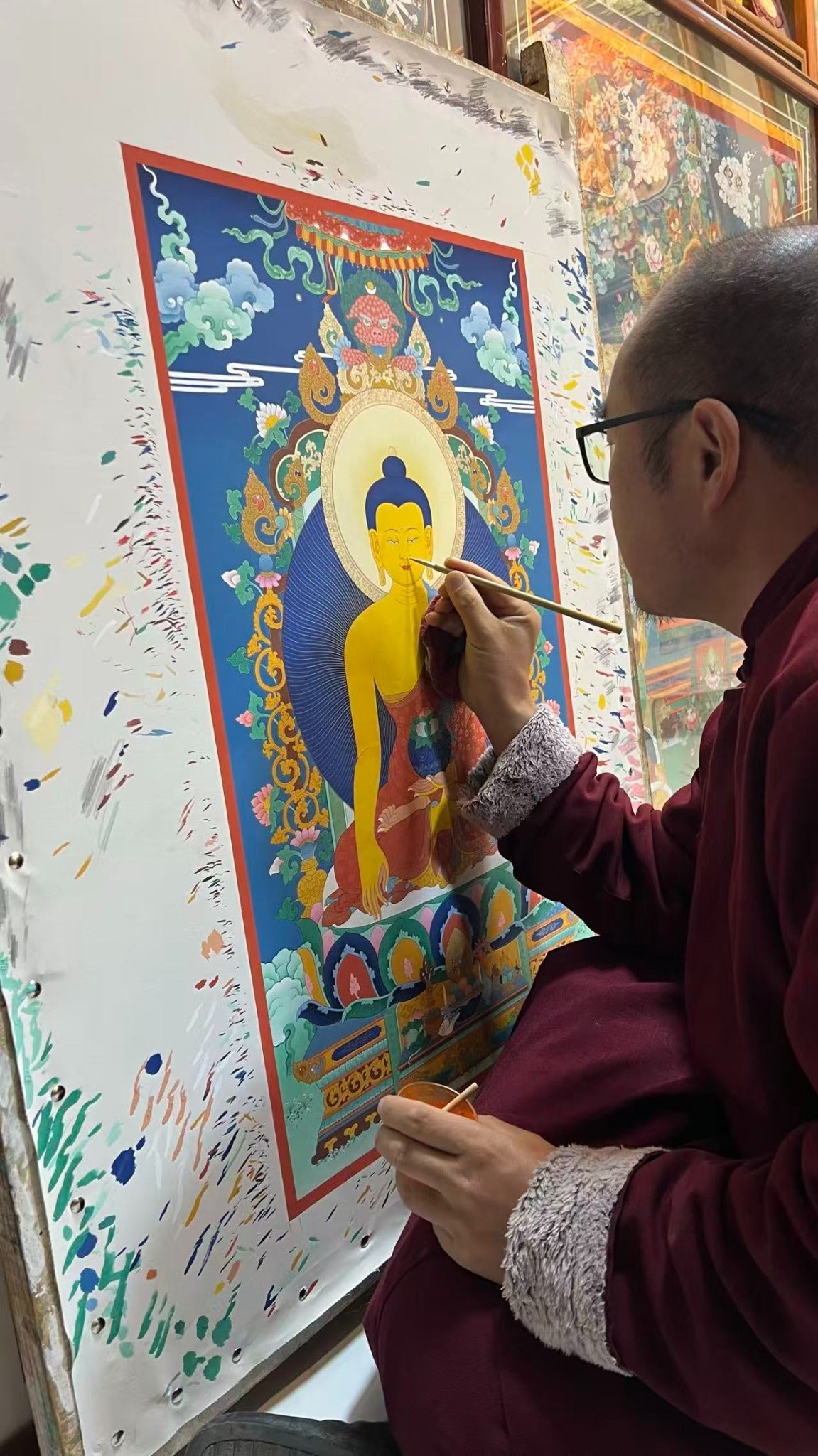
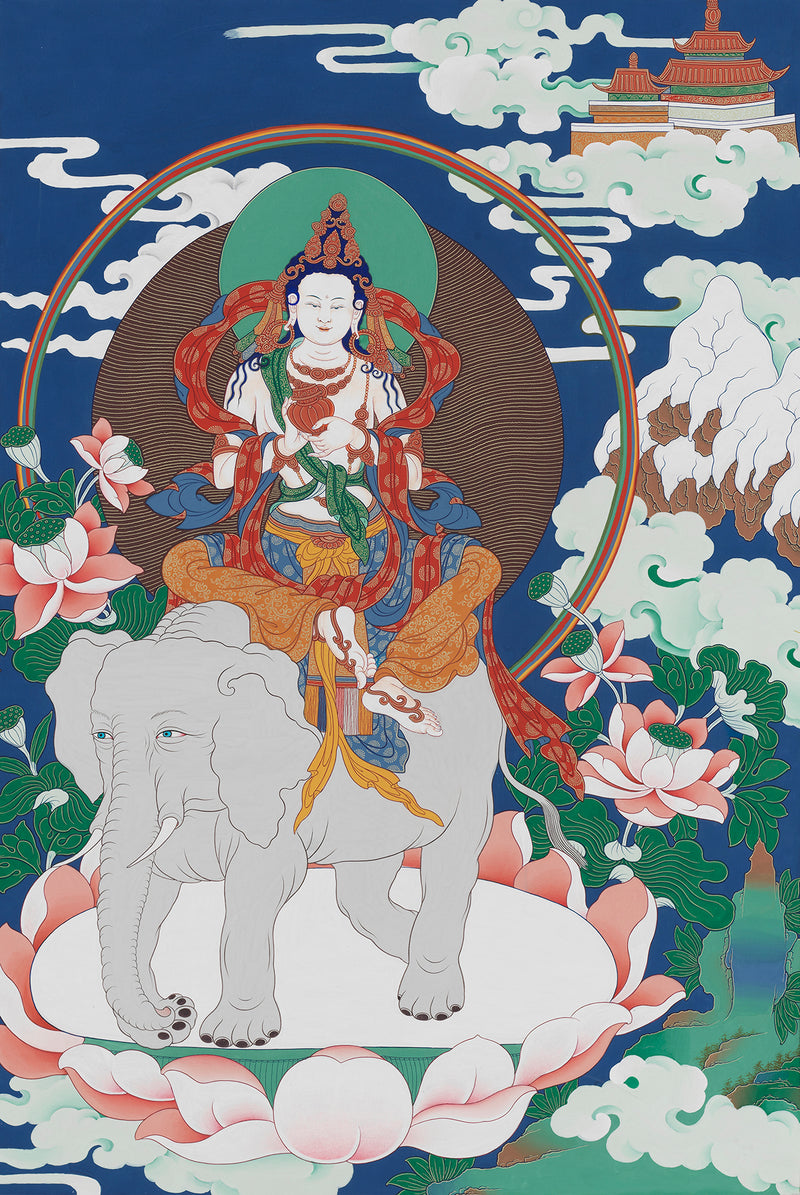
Luosang Daji · Cairang Dangzhou began learning Thangka painting at seven and studied at Wutun Upper Temple under Master Xiawu Cairang. His practice is rooted in the Menri tradition.

View artist
Artwork & Order Confirmation

Artwork & Order Confirmation

Confirm the selected Thangka, its dimensions and presentation with the museum. After ordering, check that your contact details and delivery address are correct so we can discuss the work and its dispatch.
Details & Mounting

Details & Mounting

Review photographs of the actual work and confirm its condition and mounting before dispatch. For a commission, the subject, format, materials and review stages are agreed individually with the artist and museum.

Protective Packing & Delivery

Protective Packing & Delivery

The work is packed according to its dimensions, support and mounting. Tracking details are provided after dispatch. Keep the packaging until you have inspected the Thangka and confirmed that it has arrived safely.
Viewing & Care

Viewing & Care

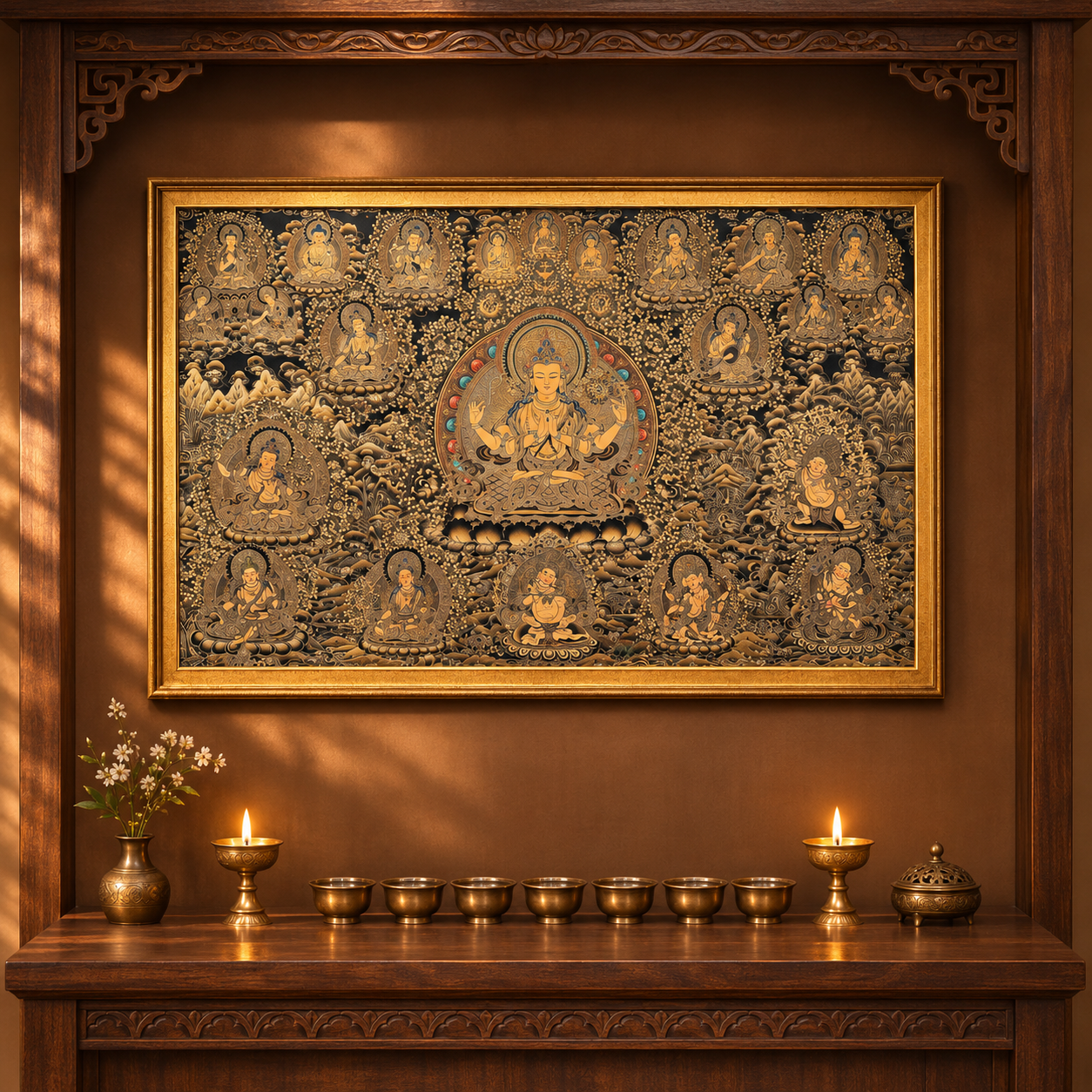
Spend time with the figures, line work and composition of the Thangka. Display it away from direct sunlight and damp conditions. Ask the museum for advice about mounting, framing or handling the specific work; avoid touching the painted surface.