Luosang Daji · Cairang Dangzhou

Green Tara — Green Ground

Artwork introduction

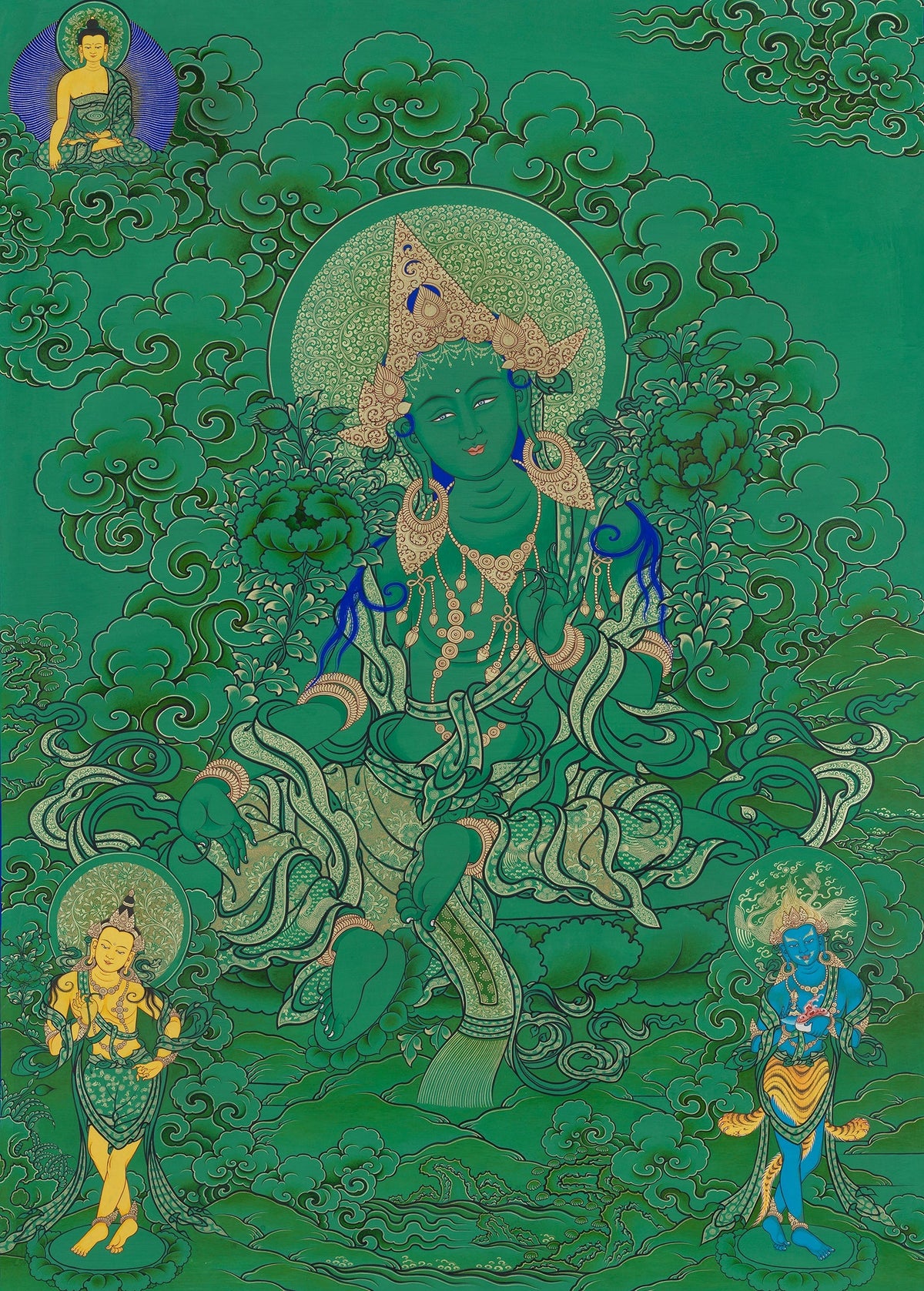
Green Tara on a Green Ground (July 2019)

An exceptionally rare masterpiece of pure green thangka painting, the entire scroll and its clouds are laid out in an all-encompassing malachite green. Green corresponds to the wind element, representing freely moving vitality and breath. In a life stifled by pressure, this pure green realm is like a natural oxygen retreat, brushing away exhaustion and inner conflict and giving a taut mind space to open up and breathe deeply.

Graceful Tara sits at ease on emerald lotuses and auspicious clouds, attended below by a gentle golden-bodied celestial maiden and a resolute deep-blue maiden, with a golden Buddha protecting from the upper left; no stray colors disturb the whole. Her right-hand wish-granting mudra guides the way toward smooth progress, the utpala flower in her left represents the evergreen, upward-reaching energy of awakening, and her stepping foot conveys protection available at any moment. Pure gold lines trace clouds and celestial robes across the boundless green like golden sunlight through a forest; the maidens provide finishing touches that break the stillness, serene and ethereal. Leave open space in life and loosen the mind's restraints, and vigorous life can return to a parched heart.

$17,795.00
勉唐画派宗师传人 罗桑达吉·才让当周大师作品
Quantity:

Total: $17,795.00

  • AliPay
  • American Express
  • Apple Pay
  • Bancontact
  • Google Pay
  • Mastercard
  • MB WAY
  • Shop Pay
  • Union Pay
  • Visa

Explore the collection: Green Tara — Green Ground

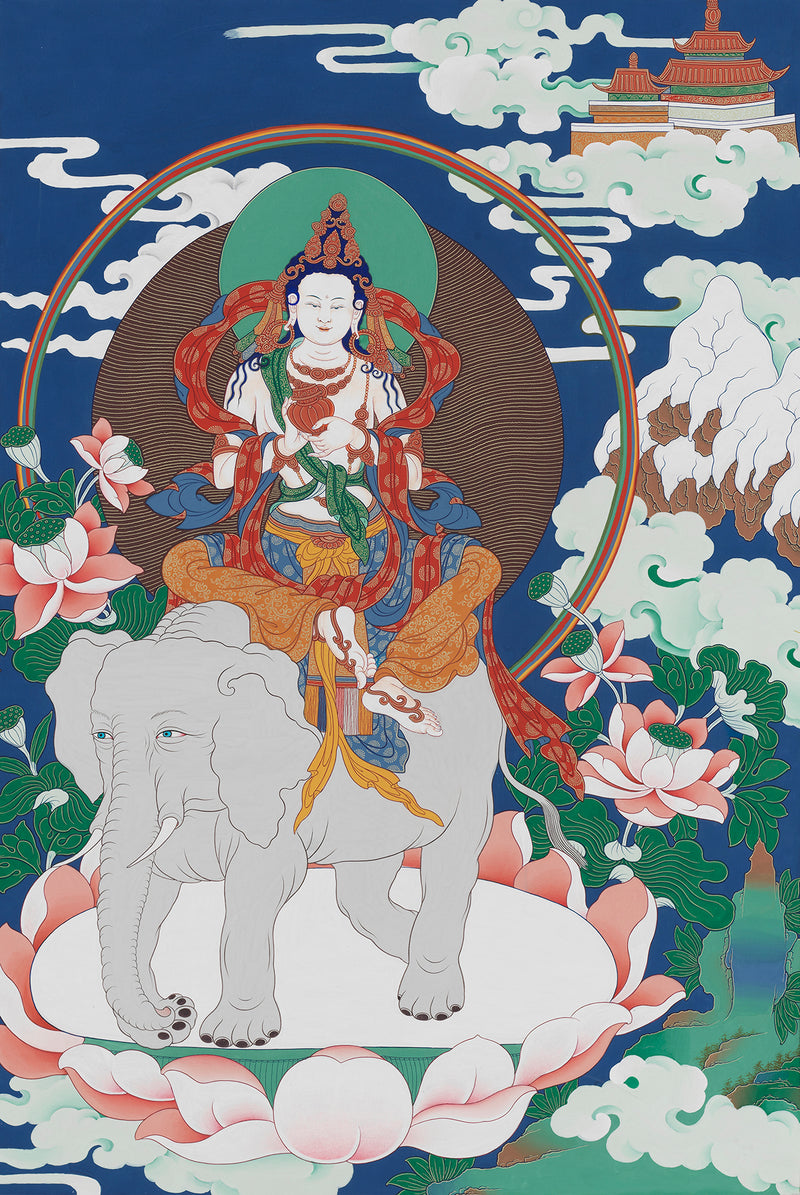
SamantabhadraYama TeachingManjushriHayagrivaPalden Lhamo
  • Hand-painted Thangka Art
  • 📦 Artwork photographs and presentation details are confirmed before dispatch.
  • 🚚 Free Shipping, Trackable Logistics
  • ↩ 30-day returns on eligible non-custom works
Artwork Details & Confirmation

Each Thangka has its own composition, dimensions and presentation. Please review the photographs and catalogue notes, and contact the museum about the work’s condition, materials or mounting before ordering.

We confirm artwork photographs and dispatch details before shipping. For a commissioned work, the subject, dimensions, materials, schedule and any agreed review stages are discussed separately.

Eligible non-custom works may be returned within 30 days of receipt, subject to the return policy.

Delivery time

Estimated delivery for available works: 10–16 business days. This consists of 5–9 business days for preparation and 5–7 business days in transit.

Preparation: order and address confirmation, checking the selected Thangka’s condition and mounting, and protective packing appropriate to the work. Commissioned works follow an individually agreed schedule.

Transit: the carrier and tracking information are provided when the work is dispatched. Commissioned works or special mounting arrangements require a separately agreed schedule. See our shipping policy.

Returns & Refunds

30-day return window: contact the museum within 30 days of receipt for eligible non-custom works. The work must be unused, in its original condition and packaging, with proof of purchase.

Commissioned or personalised works: these are non-returnable unless damaged or defective. Please discuss any difference from the confirmed commission with the museum.

Return shipping: 香港合丰 covers damaged, defective or incorrect items. For a change of mind, size or preference, the customer pays the actual return shipping cost. There is no restocking fee. Obtain return instructions before sending the work.

Approved refunds are made to the original payment method within 10 business days. If more than 15 business days have passed after approval, contact the museum. See the full return policy.

Payment Method Guide

Payment methods available for your country and currency are displayed at checkout. Please use the options shown there to complete your order.

For questions about a particular Thangka, confirm its availability, dimensions and presentation with 香港合丰 before payment. See payment information.

香港合丰 Artwork introduction

About this Thangka

Green Tara — Green Ground

Green Tara on a Green Ground (July 2019)

Each day, we introduce you to a thangka. Today we explore an exceedingly rare green thangka masterpiece, a type seldom seen among all forms of thangka painting, with its entire field covered in precious malachite: Green Tara on a Green Ground, painted in 2019.

Many people have seen color thangkas and black-and-gold thangkas, but have you ever seen a green thangka whose whole scene is pure verdant green? Why is the entire painting, including the background clouds, immersed in boundless deep green? Behind it lies one of the clearest metaphors for life in Eastern practices of cultivating the mind. Within the five-color thangka system, green thangkas are the rarest. Ancient people believed green corresponded to the wind element among the five elements, representing the world's freest, most supple vitality and the breath that releases stagnation. Living amid steel and concrete, we are often left breathless by invisible pressure. Strained relationships and daily exhaustion and inner conflict rob the mind of its flexibility, leaving it like a dried, withered branch. By spreading pure malachite green across the entire painting, the artist creates an oxygen retreat where a tired mind can breathe deeply and freely. Green Tara's emerald body brings a breath of spring across our faces when we feel stifled and oppressed. This painting is like a healing sanctuary left to us by nature, teaching us, amid life's tension, to release our shoulders and open our chests again after anxiety has filled them to the brim.

With this story in mind, the painting's overall details become clear. See how the central Tara, graceful and jade green, sits at ease on layers of curling green clouds and gently surging emerald lotuses. Below, to the left and right, stand a tender, gentle golden-bodied celestial maiden and a calm, resolute deep-blue maiden. Deep within the clouds at the upper left sits a golden emanation Buddha protected by dark blue rays. No extraneous color intrudes on the painting. The artist creates this almost absolute world of one color to convey more than simplicity of execution: when a person completely lays aside the bewildering distractions of comparison and wandering thoughts and returns to life's purest vitality, life naturally recovers its most resilient healing power.

Now look at the sacred form and its details. Tara's lowered right hand offers the wish-granting mudra, arising from her compassionate vow to answer every plea. Like a warm guiding hand extended toward the human world, it promises an open path ahead, with every hope answered. The utpala flower lightly held before her chest in her left hand represents, in the scriptures, the evergreen and unfading character of awakening, reminding us to preserve a vigorous, upward-reaching life force in favorable and adverse circumstances alike. Her right foot steps beyond the lotus seat, her eager posture ready to rush to anyone in distress, silently communicating that however oppressed or lonely you feel, her gentle, spring-like protection is always there.

In its colors, the entire painting is painted with precious, ground natural malachite, using a single hue throughout, as lush and vivid as an immense forest. Pure gold lines trace rolling auspicious clouds and magnificent celestial robes through the endless deep green, appearing and disappearing like golden patches of dawn filtering through the trees. The bright yellow maiden at the lower left and the azurite-blue maiden at the lower right provide finishing touches that break the stillness. Serene and ethereal in color, the painting radiates an Eastern healing realm that brings a sense of coolness at first sight.

Once you understand this Green Tara on a green ground, you will see: leave open space in life and release the mind's restraints, and vitality can quietly awaken again within your heart.

May you also find a clear and easy composure in life, like a spring breeze brushing willow branches; breathe deeply and grow toward the light.

Follow 香港合丰 to discover more Eastern stories within the paintings!

Luosang Daji · Cairang Dangzhou

Luosang Daji · Cairang Dangzhou

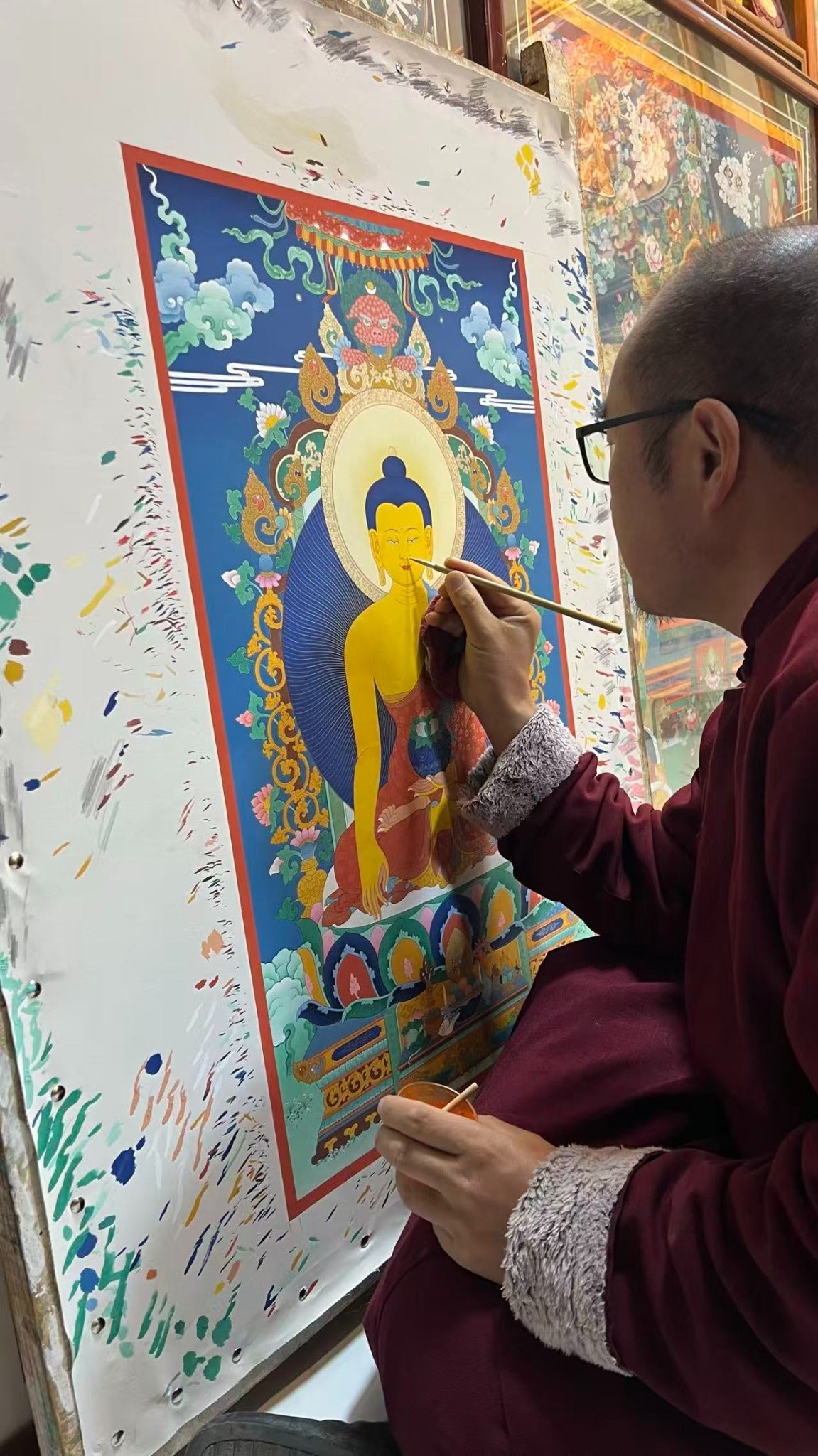
Luosang Daji · Cairang Dangzhou began learning Thangka painting at seven and studied at Wutun Upper Temple under Master Xiawu Cairang. His practice is rooted in the Menri tradition.

View artist
Artwork & Order Confirmation

Artwork & Order Confirmation

Confirm the selected Thangka, its dimensions and presentation with the museum. After ordering, check that your contact details and delivery address are correct so we can discuss the work and its dispatch.
Details & Mounting

Details & Mounting

Review photographs of the actual work and confirm its condition and mounting before dispatch. For a commission, the subject, format, materials and review stages are agreed individually with the artist and museum.

Protective Packing & Delivery

Protective Packing & Delivery

The work is packed according to its dimensions, support and mounting. Tracking details are provided after dispatch. Keep the packaging until you have inspected the Thangka and confirmed that it has arrived safely.
Viewing & Care

Viewing & Care

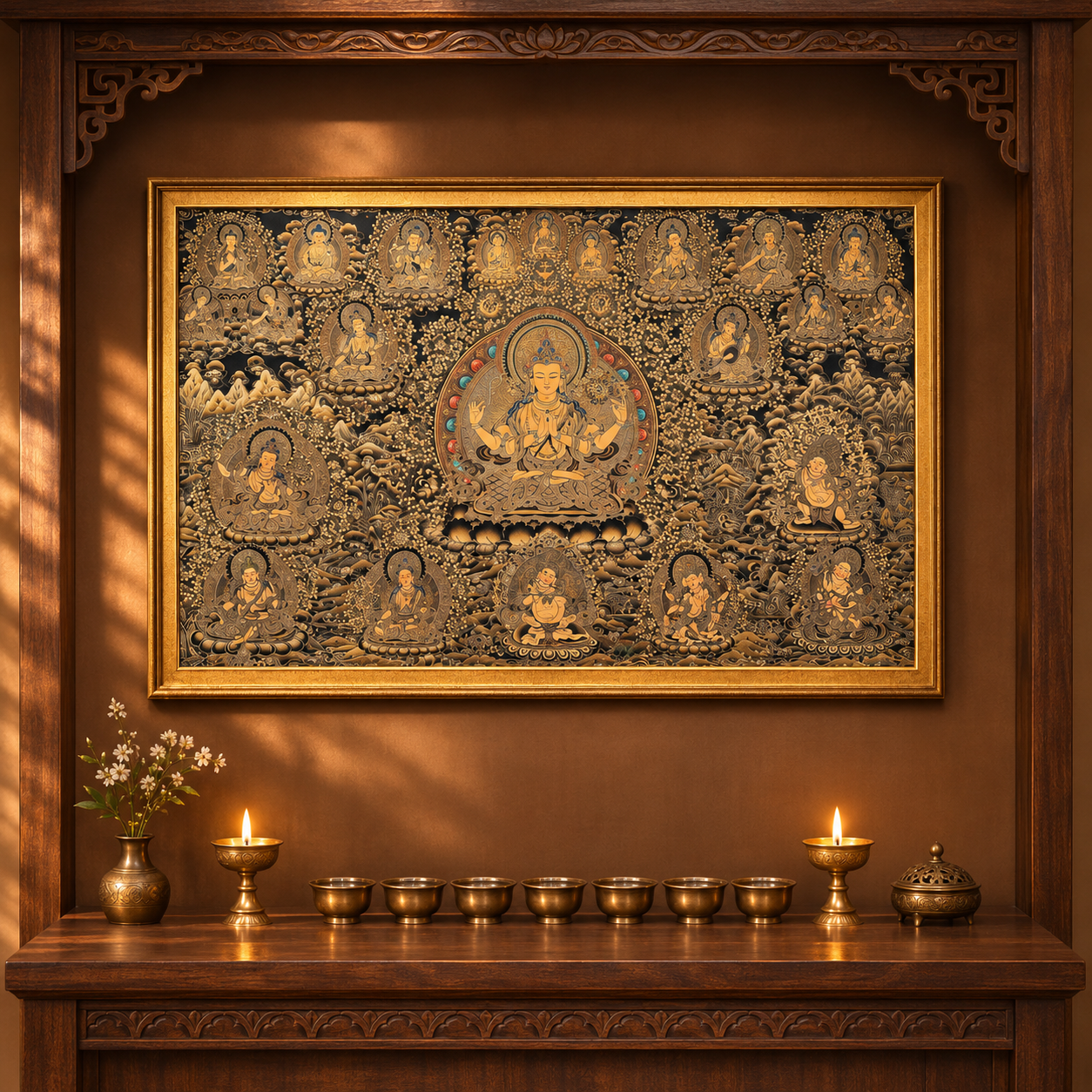
Spend time with the figures, line work and composition of the Thangka. Display it away from direct sunlight and damp conditions. Ask the museum for advice about mounting, framing or handling the specific work; avoid touching the painted surface.